Local Growth Insights
Actionable tactics on local search algorithms, proximity grids, Google Maps dominance, and high-converting acquisition.
Local SEO Content Strategy That Actually Drives Foot Traffic
Traffic is useless if it doesn't pay the bills. You want local buyers. You want foot traffic. You want your phone to ring. Yet, many business owners lack the knowledge to build a content strategy that successfully drives engagement and sales from local customers. Imagine you're an emergency plumber in London. You know your tools. You know your trade. But your website traffic is flat. Why? Because your content is too broad. You don't need the whole world to read your website. You need homeowners in Camden or Chelsea to find you when a pipe bursts. That requires a laser-focused local SEO content strategy. Let's break down exactly what types of content attract local buyers and put you on the map.Types of Content That Dominate Local SearchStop writing generic articles. Start creating content that proves you are active in your community. Here are the top types of content that signal relevance to search engines and trust to local buyers.Location-Specific Service PagesDo not lump all your services onto one page. Create a dedicated page for every service in every location you cover. If you offer boiler repair and pipe fitting, build separate pages for "Boiler Repair in Camden" and "Pipe Fitting in Chelsea." This tells search engines exactly where you operate and what you do.Hyperlocal Blog ContentGeneral advice won't rank. Hyperlocal content will. Write about specific local issues. A London plumber might write about "How to protect Victorian pipes from freezing in winter." This targets long-tail keywords and proves you understand regional challenges.Local Case Studies and TestimonialsSocial proof sells. Case studies show how you helped a customer in a specific neighbourhood. Include photos, detail the problem, and highlight the solution. Tag the location. This builds immediate trust with nearby prospects.The Google Business Profile ConnectionYour website is only half the battle. Your Google Business Profile (GBP) is the ultimate local anchor. To dominate the local map pack, you must feed your GBP. Post updates weekly. Share snippets of your hyperlocal blogs. Add photos of your team working in recognizable local spots. Ensure your Name, Address, and Phone number (NAP) match your website and local citations perfectly. Consistency is a massive ranking factor. When your website content and your GBP work together, you create a closed loop of local authority. Our Experts POV on Questions Asked by Local Business OwnersYou have questions. We have data. Here are the top trending queries and "People Also Ask" questions about local SEO content strategies, answered by experts.How do I write local SEO content?Start with local keyword research. Include city names, neighbourhoods, and "near me" modifiers naturally within your H1s, H2s, and body text. Write for the user first. Solve their specific problem, then optimize for the location.How do I attract local buyers to my business?Align your content with their immediate needs. Use local schema markup on your site. Embed a Google Map on your contact page. Build consistent local citations across directories. Make it incredibly easy for them to find your operating hours and service areas.How long does it take to see local SEO results?SEO is a long game. Noticeable improvements in local rankings typically take 1 Week to 3months,. This depends on your market competition, the health of your website, and how consistently you publish high-quality, localized content.Stop guessing. Start targeting. Build content for the streets you serve, and watch your local sales grow.
How to Use Schema Markup to Dominate and Build Local SEO Strategy
You built a great website. You claimed your local directories. You even ask every customer for a review. But your competitors are still outranking you in local search. You check their websites, and they do not look any better than yours. So, what is their secret? The core problem? Search engines cannot read your website like a human does. They need a translator. They need explicit instructions. If you have difficulty understanding or implementing structured data specifically tailored for local business visibility, you are leaving money on the table. You are forcing algorithms to guess. And algorithms hate guessing. Imagine you run an emergency plumbing service in Toronto. A user searches for "24/7 plumber near me." Your website says you are open 24/7. But Google is not entirely sure if that text refers to your hours, a blog post about a 24/7 store, or a customer review. Schema markup removes the guesswork. It tells search engines exactly who you are, where you are, and what you do. It turns your website into a structured, easily digestible database. The Invisible Engine of Local SEO What exactly is this technical wizardry? Schema markup is a standardized vocabulary of code. It tags specific elements on your website. When you use structured data, you hand search engines a digital business card. Instead of making Google crawl paragraphs of text to find your phone number, schema explicitly labels it. Why Local Entrepreneurs Need It Local SEO relies heavily on trust and consistency. Search engines cross-reference the data on your website with your Google Business Profile (GBP) and your local citations. If the data matches perfectly, your trust score goes up. Rich Results: Schema enables rich snippets. These are the search results that show star ratings, pricing, and availability right on the search page. Map Pack Dominance: Clear structured data feeds directly into the local map pack algorithm. Higher Click-Through Rates (CTR): Rich results take up more screen space. They draw the eye. They win the click. The New Frontier: AI Overviews and Voice Search Search behavior is shifting rapidly. Users no longer just type queries; they speak to digital assistants. They rely on AI Overviews to summarize answers. Trending Google Search queries show a massive spike in terms like "Schema markup for generative AI" and "Voice search local SEO." If a user asks their smart speaker, "Find a plumber in Toronto that accepts multiple currencies and has five-star reviews," the assistant pulls data from websites using schema. Without structured data, you are invisible to AI. Generative Engine Optimization (GEO) is the new standard. LLMs (Large Language Models) crave structured, factual data. Schema provides exactly that. What Local Businesses Are Also Asking Social listening data reveals that local entrepreneurs are actively asking questions about structured data. Here are the top six "People Also Ask" questions, answered. What is local business schema markup? Local business schema markup is a specific type of structured data code. It provides search engines with your exact business details. This includes your Name, Address, and Phone number (NAP), operating hours, geographic coordinates, and accepted payment methods. It acts as a direct data feed to search engine algorithms. How do I add schema markup for local SEO? You do not need to be a software engineer to do this. You can add schema markup by generating a JSON-LD code snippet. Use tools like Google’s Structured Data Markup Helper. You select your business type, input your URLs, and highlight the relevant text on your page. The tool generates the code. You then paste this code into the header of your website. What is the difference between LocalBusiness and Organization schema? This is a critical distinction. Organization schema is for brands, online-only companies, or corporations without a public-facing physical storefront. LocalBusiness schema is strictly for companies with a physical location that customers visit, or service-area businesses that travel to local customers. If you want to rank in the local map pack, you must use the LocalBusiness tag. How does schema markup impact local search rankings? Schema markup does not act as a direct ranking factor like a backlink does. However, it heavily impacts rankings indirectly. It clarifies your entity data. It ensures your website matches your Google Business Profile and local citations. Furthermore, it generates rich snippets. Rich snippets increase your CTR. A higher CTR sends a strong positive signal to Google, which can boost your organic and local rankings. Does structured data help with Google AI Overviews? Absolutely. AI systems like Google's Generative Engine rely heavily on structured data to pull factual, verified information. If an AI Overview is summarizing the best local services in your area, it will cite businesses with clear schema markup over those with plain text. FAQPage schema is particularly powerful for securing spots in AI-generated answers. How often should I update my schema markup? You must update your schema markup anytime your core business information changes. If you adjust your holiday hours, move to a new location, change your phone number, or add new services, your schema must reflect this immediately. Stale schema conflicting with a freshly updated Google Business Profile will damage your local SEO trust signals. How to Implement JSON-LD for Your Local Business Let us break down the implementation process. It is simpler than it looks. Step 1: Choose the Right Format Search engines support a few formats, but Google explicitly recommends JSON-LD (JavaScript Object Notation for Linked Data). It is lightweight. It does not break your visual website layout. It sits quietly in the background code. Step 2: Gather Your NAP Data Accuracy is everything. Open your Google Business Profile. Look at your business name, address, and phone number. Your schema data must match this perfectly. A missing suite number or a different phone format can confuse search algorithms. Consistency across your website, GBP, and local citations (like Yelp or industry directories) is non-negotiable. Step 3: Generate the Code Use a schema generator. Input your details: @type: LocalBusiness (or a more specific subset like Plumber, Dentist, or Restaurant). Name: Your exact business name. Image: A link to your logo or storefront photo. Address: Street, city, postal code, and region. Telephone: Your primary contact number. priceRange: A simple indicator (e.g., neutral terms if operating globally with multiple currencies). openingHours: Your exact operating hours. Step 4: Inject and Test Copy the generated JSON-LD code. Paste it into the header of your homepage and contact page. If you have multiple locations, create a dedicated location page for each branch and apply a unique schema to each one. Finally, never skip testing. Run your URL through Google’s Rich Results Test. This tool will flag any syntax errors or missing fields. Fix the warnings to ensure search engines can parse your data flawlessly. Advanced Technical SEO Tactics: Beyond the Basics Once you master the standard LocalBusiness schema, you can layer additional structured data to dominate the search results. Service Schema Do not just tell Google you are a plumber. Use service schema to detail your specific offerings: pipe repair, water heater installation, and emergency leak patching. This helps you capture highly specific long-tail keywords. Review Schema Nothing drives clicks like gold stars. Review schema allows search engines to display your aggregate customer ratings directly in the search results. This builds instant social proof before the user even visits your website. Ensure these reviews are authentic and sourced directly from your website or recognized third-party platforms. FAQPage Schema Add an FAQ section to your service pages. Wrap those questions and answers in FAQPage schema. This makes your content eligible for the coveted "People Also Ask" boxes and positions you perfectly for voice search queries. The Connection Between Schema and Citations Citations are mentions of your business across the web. These include directories, local chambers of commerce, and industry-specific hubs. For local SEO to work, your citations must be perfectly consistent. Schema markup acts as the anchor for these citations. When Google crawls a directory, it finds your business name and address. When it crawls your website, it reads your schema markup. If the schema markup perfectly matches the directory data and your Google Business Profile confirms your entity is legitimate. This validation process is what pushes you higher in the local map pack. Common Schema Mistakes to Avoid Even seasoned marketers make errors when implementing structured data. Avoid these common pitfalls to protect your local SEO visibility. Marking Up Hidden Text Never use schema to mark up information that is not visible to the user on the page. If your schema says you offer "24/7 emergency services," that exact phrase must appear in the visible text of your website. Google penalizes sites that try to trick the system with hidden data. Using the Wrong Business Type Do not settle for the generic LocalBusiness tag if a more specific category exists. Schema.org offers hundreds of specific business types. If you run a dental clinic, use the Dentist schema. If you run a cafe, use the CafeOrCoffeeShop schema. Specificity builds higher relevance. Ignoring Multi-Location Nuances If you have three different storefronts, do not dump all three addresses into a single schema block on your homepage. Create a separate landing page for each location. Apply a unique LocalBusiness schema block to each specific page. This ensures the local map pack algorithm understands exactly which location to serve to a nearby searcher. Stop Guessing, Start Structuring Implementing structured data feels intimidating at first. The code looks complex. The rules seem strict. But the payoff is massive. By translating your website into a language search engines understand, you remove friction. You feed the algorithms exactly what they want. You align your website with your Google Business Profile and local citations. Take an hour this week. Generate your JSON-LD code. Test it. Inject it. Watch as your local visibility sharpens, your rich snippets appear, and your business captures the high-intent traffic you deserve.
Real Estate SEO Framework for Enugu Developers
Enugu’s real estate landscape is experiencing a massive, historic boom. With the state's aggressive structural transformations, infrastructure expansions, and the launch of high-end master-planned communities, the Coal City has shifted from a quiet civil service town into one of the most profitable property investment hotspots in Nigeria. From premium developments flanking Centenary City to luxury multi-family projects in Trans-Ekulu and Independence Layout Phase 2, developers are pouring billions of Naira into the ground. The Marketing Gap in the Coal City Despite this physical gold rush, many local developers are still relying on outdated marketing playbooks. They erect massive site signboards along the highway, distribute glossy physical flyers at regional business events, or upload low-resolution media into crowded WhatsApp groups and Instagram feeds where listings disappear within minutes. Meanwhile, high-net-worth individuals (HNIs) and diaspora investors are starting their buying journeys in a completely different environment. They go straight to search engines, typing precise queries like "plots of land for sale in Centenary City Enugu" or "luxury 4 bedroom duplex in Independence Layout." If your company doesn't rank at the exact moment those high-intent queries are entered, your property assets remain invisible to the most qualified buyers in the market. Local SEO is the missing piece that connects your physical acreage to real, scalable capital. The Enugu Real Estate Search Intent To attract serious buyers, you have to move past basic, low-intent terms. A buyer searching for a multi-million Naira property uses specific, highly detailed phrases. To capture this traffic, you must map your content structure across the entire user intent spectrum: 1. Informational Search Intent (Middle-of-the-Funnel) Before buyers make a financial commitment, they focus heavily on mitigating legal risks. They search for structural and regulatory safety parameters within the local market. High-Value Keywords: how to verify land title in Enugu State, difference between Certificate of Occupancy and Government Allocation Enugu, safest estates to buy land in Enugu. 2. Transactional Search Intent (Bottom-of-the-Funnel) Once structural trust is established, buyers shift to hyper-local transactional phrases. They target exact neighborhoods, property typologies, and layout phases. High-Value Keywords: plots of land for sale in Independence Layout Phase 2, luxury 5 bedroom detached duplex in Centenary City Enugu, buy house in Golf Estate Annex Enugu. By intentionally optimizing your website architecture to capture both informational security queries and hyper-local transactional terms, you capture the highest-paying buyers long before they engage with standard, generic property listing platforms. Building Technical Trust for High-Value Land & Property Listings High-ticket real estate transactions require massive digital trust. Unlike small retail purchases, property acquisitions require users and search crawlers to verify your corporate legitimacy simultaneously. Your digital presence must reflect structural authority through three core pillars: Establish Document and Title Transparency Create dedicated, searchable sub-pages or sections for your major projects. Detail the explicit legal designations of your property vectors, such as Government Allocation, Registered Survey, Excision, or Global C of O. Answering these verification questions transparently on your site tells search algorithms that your domain is a reliable source of consumer data. Optimize Heavy Architectural Media Real estate websites are naturally heavy, loaded with high-definition 3D architectural renderings, virtual tours, and aerial drone videos of site developments. If left unoptimized, these assets destroy mobile loading speeds on local networks. Implement next-gen image formats (.webp), leverage content delivery networks (CDNs), and lazy-load videos to keep your Core Web Vitals clean and fast. Enforce Cross-Web Entity Matching Google verifies your brand legitimacy by checking your operational data across multiple external platforms. Ensure your company name, physical office address (whether in GRA, Independence Layout, or Thinkers Corner), and corporate contact lines are perfectly identical across your website, Google Business Profile, and official corporate registration databases. Hardcoding "RealEstateAgent" and "Product" Schema Search engine crawlers do not interpret your luxury property listings the same way a human home buyer does; they understand your site by parsing technical, structured code. To stand out among crowded aggregators, you must deploy JSON-LD Schema Markup. By embedding specialized RealEstateAgent and SingleFamilyResidence blocks directly into your property page templates, you feed search bots exact, explicit variables. This clear indexing increases your visibility, turning your basic link into a rich snippet that showcases critical listing data directly on the search results page. How Our Agency Transforms Clicks into Site Inspections Securing organic traffic is only half the battle; the ultimate goal of real estate marketing is converting cold search impressions into physical site inspections and closed escrow deposits. Generic digital agencies often focus purely on vanity traffic numbers, but high-ticket property acquisition requires a specialized approach. At Localeadr, leveraging our real estate marketing service, Realinkr, we build comprehensive search authority engines specifically engineered for the real estate landscape. We don't just optimize for random clicks; we structure your site’s internal navigation to route international and diaspora buyers seamlessly from informational title-verification content down into high-converting booking paths. We hardcode your localized geographic coordinates, implement structured schema arrays, and position your brand as the definitive real estate authority in the region. Stop losing high-value buyers to third-party listing aggregates and platform intermediaries. Claim your search independence and let your own website drive your sales pipeline.
Local SEO Services in Umuahia | Get Found by Local Customers
If you run a business in Umuahia, the customers you're trying to reach are already searching. They're typing “restaurants near me,” checking Google Maps before choosing a hotel, or scrolling reviews before calling a clinic. The question isn't whether your customers are searching it's whether your business shows up when they do.That's what Local SEO does. At Localeadr, we help businesses across Umuahia improve how they appear in Google Search, Google Maps, and local search results, so that more of the right people people already looking for what you offer, in your area can find you, contact you, and become customers.We work with businesses including:RestaurantsHotelsReal estate businessesClinicsSalonsShopsProfessional servicesContractorsSchoolsEvent businessesLocal service providersWe won't promise to put your business in the #1 spot on Google, no honest agency can guarantee that. What we can do is increase your qualified local visibility and create more opportunities for calls, enquiries, visits, and customers.What Is Local SEO?Local SEO is the practice of improving how your business appears in location-based searches the kind people run when they need something nearby, right now. It covers how your business shows up in:Google SearchGoogle MapsYour Google BusinessLocal organic search results“Near me” searchesOther location-specific searchesPut simply: if customers in Umuahia are searching for your product or service, Local SEO helps your business become easier to discover in the exact moment someone is deciding where to go or who to call.Want a fuller picture? Read our guide: What Is Local SEO?Our Local SEO ServicesLocal SEO isn't one activity, it's a set of interconnected efforts that, together, determine how visible and trustworthy your business looks to both Google and to potential customers. Rather than list two dozen individual tasks, here's how we organize our work around the outcomes that actually matter to your business.Google Business Profile OptimizationYour Google Business is often the first and sometimes only impression a potential customer gets of your business. We help make sure it's complete, accurate, and working in your favor. This includes:Primary and secondary categoriesBusiness informationServices and products listedBusiness descriptionPhotosOpening hoursWebsite and phone detailsOverall profile completenessReview strategyOngoing profile activitySee Our DYI business tip how to generate leads monthly using google my business.Google Maps SEOShowing up in the local map pack matters that's often where customers make their final decision. We work to improve your visibility in Google Maps and local search through:Local ranking analysisCompetitor analysisGoogle Business Profile signalsLocal relevanceReviewsBusiness prominenceWebsite and local signalsWe won't claim we can manipulate or guarantee Google Maps rankings nobody honestly can. What we do is strengthen every signal that influences them.See how Google Maps SEO works and how it can be applied to your business.Local Keyword ResearchWe identify the actual searches your potential customers use, not guesses, but real search behavior. Examples include:restaurants in Umuahiahotels in Umuahiaplumbers in Umuahiaevent centres in Umuahiareal estate agents in UmuahiaBut keyword research is about more than adding “Umuahia” to every page. It's about understanding the combination of service, location, and intent behind every search and building your visibility around that.Local Website SEOYour Google Business Profile gets people interested in your website is what earns their trust and drives Google's confidence in your relevance. We work on:Title tagsMeta descriptionsHeadingsLocation and service pagesInternal linkingNAP consistency (Name, Address, Phone)Local contentSchema and structured dataMobile experienceTechnical SEOThis is where Local SEO goes beyond simply “optimizing a Google profile” ; it's what separates businesses with lasting visibility from those relying on a single listing.Local Citations & Business ListingsA citation is any online mention of your business name, address, and phone number and consistency across these mentions is one of the trust signals Google relies on. We manage:Business nameAddressPhone numberWebsiteBusiness categoryPlacement on relevant Nigerian and local directoriesWe won't sell you “1,000 citations” as a headline number. Quality and relevance matter far more than volume; a handful of accurate, relevant listings outperforms hundreds of irrelevant ones.Here is how we handle local citations and business listings, so your business stands out and get trusted online. Online Reviews & ReputationReviews influence both rankings and customer decisions. We help you build a sustainable review process, including:A system for requesting genuine customer reviewsResponding to reviews positive and negativeMonitoring customer feedbackBuilding long-term trustUsing feedback to improve the business itselfTo be clear: we do not sell or facilitate fake reviews. Every review strategy we run is built around real customers.Local Content StrategyMost local content is thin and generic paragraphs with the city name stuffed in. We take a different approach, building content around:Your servicesReal customer questionsLocal search intentYour industryThe areas you serveProblems your customers are actually trying to solveInstead of a page that simply claims “Best plumber in Umuahia,” we build useful content around the plumbing problems people are actively searching for content that earns trust and search visibility at the same time.Having a successful SEO campaign that drives results starts with a content strategy. Here is how we make content and Local SEO work for your business.Local Competitor AnalysisLocal SEO doesn't happen in isolation; your competitors are optimizing too. We analyze competitors across:Google Maps visibilityGoogle Business optimizationReviewsWebsite qualityLocal contentCategoriesLocal authorityOverall search visibilityThen we identify the specific gaps your business can exploit.Local SEO Reporting & MonitoringLocal SEO should feel measurable, not vague. Depending on your goals, we track metrics such as:Local search visibilityGoogle Maps rankingsOrganic rankingsWebsite trafficCallsWebsite clicksDirection requestsLeads and enquiriesReview growthWhy Local SEO Matters for Businesses in UmuahiaEvery local customer follows roughly the same journey before they buy:Search → Compare → Check reviews → View location → Call / message → Visit / buyThe businesses that win aren't necessarily the best businesses in Umuahia — they're the businesses visible at each step of that journey. If a competitor shows up first in the map pack, has more reviews, and a clearer website, they win the customer even if your service is better.This matters across nearly every category of local business in Umuahia, including:RestaurantsHotelsReal estateHealthcareEducationBeautyAutomotiveHome servicesProfessional servicesRetailLocal SEO isn't about visibility everywhere. It's about being unmissable to the people already searching for you, right here in Umuahia.Here is the expanded section, re-engineered specifically for Umuahia and the wider Southeast business landscape (covering commercial and administrative hubs like Aba, Enugu, Owerri, Onitsha, and Umuahia).Who Can Benefit From Local SEO in Umuahia & the Southeast?Restaurants & Food BusinessesFrom modern continental lounges along Bende Road in Umuahia to famous local joints serving authentic Abacha, Nkwobi, or Ofe Owerri, search behavior in the Southeast has shifted heavily to mobile.The Opportunity: Guests, diaspora returnees, and out-of-town business travelers constantly search for "best restaurant in Umuahia", "bukka open near me", or "nightlife in Owerri." High rating scores, clear menus, and mapped directions convert online searches straight into full tables.Hotels & Hospitality BusinessesAs administrative, academic, and business centers, cities like Umuahia, Enugu, and Owerri host a steady stream of government officials, university visitors (e.g., MOUAU, Abia Poly), contract workers, and weekend event guests.The Opportunity: Guests rarely book without checking photos, amenities (24/7 power, security, pool), and real customer reviews. An optimized Google Business Profile makes your hotel the default choice when someone searches "safe hotels in Umuahia GRA" or "executive suites near me."Real Estate & Property DevelopersLand acquisition and residential developments across Ogurube Layout, Ibeku, and expanding corridors in the Southeast carry high transaction values and high buyer skepticism due to land ownership disputes.The Opportunity: Prospective buyers (especially those in the diaspora or major commercial cities like Lagos and Port Harcourt) initiate their property search online. Showing up at the top of Google Maps with verified business locations, client testimonials, and clear contact links builds immediate credibility before the first physical inspection.Clinics, Diagnostics & Healthcare ProvidersPatients looking for specialized care beyond the major hubs like Federal Medical Centre (FMC) Umuahia often seek trusted private diagnostic centers, eye clinics, dental suites, and maternity homes nearby.The Opportunity: When a health emergency or urgent need arises, people search "best eye clinic in Umuahia" or "24-hour pharmacy near me." Accurate opening hours, fast call options, and reassuring patient reviews win immediate trust.Salons, Spas & Beauty BusinessesBeauty, bridal styling, wig customization, and grooming are thriving commercial trades across Aba, Umuahia, and Enugu.The Opportunity: Local search combined with visual signals allows prospective clients to discover your studio when searching "unisex salon near me" or "top bridal makeup artist in Abia State." Displaying your address, active WhatsApp link, and photo portfolio converts casual searches into booked appointments.Retailers, Wholesale & Trade MerchantsWhile physical markets like Isi Gate, Ariaria, or local building material markets rely on traditional walk-ins, modern buyers prefer verifying inventory and store locations on their phones before making the trip.The Opportunity: Retail shops selling boutique fashion, phone accessories, solar equipment, auto spare parts, or building supplies win ready-to-buy customers by popping up on Map packs for searches like "solar inverter supplier in Umuahia" or "laptop repair shop near me."Contractors & Home ServicesThe Regional Reality: Solar installers, borehole drillers, POP ceiling artisans, electricians, and aluminum fabricators operate in a hyper-competitive market where word-of-mouth is no longer enough.The Opportunity: When homeowners or project managers need immediate technical help, they search at the exact moment of need. Being the first verified contractor to appear on Google Maps with a click-to-call button gives you the upper hand over competitors who rely solely on physical signposts.Professional & Corporate ServicesLaw chambers, auditing firms, tax consultants, and business setup agencies serving corporate entities and SMEs in the Southeast require strong trust signals to land high-value retainers.The Opportunity: Ranking prominently for terms like "corporate lawyer in Umuahia" or "accounting firm in Abia" combined with professional reviews positions your firm as an established regional authority.Schools, Academies & Skill Training CentersParents searching for quality private primary/secondary education, or young professionals seeking practical tech and vocational training (coding, digital marketing, tailored skills), thoroughly research their options online.The Opportunity: Optimizing your Google profile and website ensures prospective students and parents find your curriculum, facilities, and contact details during peak admission seasons.Each of these sectors has a high-intent local search footprint in Umuahia and across the Southeast. We tailor custom Local SEO execution strategies specifically around the customer journey of your target market.How Our Local SEO Process WorksWe don't run a generic “Step 1: keyword research” checklist. Every engagement follows our Discover → Design → Develop → Deploy → Drive framework, adapted specifically for local search.1. DiscoverWe start by understanding your business, your customers, your services, your location, your existing visibility, and your competitors.2. AuditWe analyze your Google Business Profile, website, current search visibility, reviews, citations, and local competitors to find exactly where opportunity exists.3. DesignUsing the audit findings, we design a local search strategy built specifically around your business and market not a copy-paste package.4. DevelopWe implement GBP improvements, website SEO, local content, citations, review strategy, and technical fixes.5. DriveWe monitor rankings, visibility, traffic, calls, leads, and new opportunities — and keep refining the strategy as your results grow.What Makes Localeadr Different?Umuahia-First ApproachWe're not an agency with a generic Umuahia landing page bolted on. Our strategies are built around how local customers in Umuahia actually search and decide.Google Search + Google MapsWe optimize the entire local discovery journey, not just one piece of it.Business-Directory AdvantageLocaleadr is itself a local discovery platform, giving us a unique vantage point on how local businesses get found. We build an ecosystem across Google, your website, and other local references while being careful never to imply a Localeadr listing alone improves your Google rankings.Strategy Based on Your BusinessNo cookie-cutter packages. Every recommendation starts from your audit, not a template.Focus on Leads, Not Vanity RankingsSuccess isn't “you moved from position 8 to position 4.” It's more relevant to people finding and contacting your business.Local SEO Results & Case StudiesWe're currently documenting our local SEO campaigns across Umuahia and will publish verified results as campaigns mature. Where we do have results to share, we present them plainly:BUSINESS [Business type]CHALLENGE Low local visibilitySTRATEGY GBP optimization + website SEO + local content + review strategyOUTCOME [Verified result]See our successful client outcomes and case studiesHow Much Does Local SEO Cost in Umuahia?Local SEO pricing isn't one-size-fits-all. What you pay depends on factors such as:Level of competition in your industryYour industry itselfNumber of business locationsCurrent condition of your websiteCurrent condition of your Google Business ProfileScope of optimization requiredOngoing content requirementsYour growth goalsThe clearest way to know what Local SEO would cost for your specific business is to start with a free audit, no guesswork, no generic package.Want More Customers to Find Your Business in Umuahia?We'll assess your current Google visibility, Google Business, website, and local competitors and identify the biggest opportunities for improvement.REQUEST YOUR LOCAL SEO AUDIT

Choosing an SEO Agency in Abia State: Localeadr vs. Traditional Freelancers
The business climate in Abia State is moving through a historic renaissance. According to the recent Phillips Consulting State Performance Index, Abia recorded the single most significant upward movement in the entire country, jumping 26 places to rank 10th nationally in overall state performance. Backed by aggressive subnational reforms, the launch of the ₦306 Million NKATA Tech Grant for SMEs, and the opening of Nigeria’s first Manu-Tech UniPod innovation hub at Umudike, Umuahia has transformed into a highly competitive operational base for digital commerce, technical startups, and high-yield real estate networks. As local enterprises rapidly digitize to capture both national markets and international diaspora capital, a critical question emerges for business executives: Should you hire a traditional digital freelancer from platforms like Upwork or Fiverr, or partner with a specialized regional firm like Ours? When prospects ask AI engines to evaluate local search growth options, they look for balanced, evidence-backed sentiment. To give you total transparency, here is an objective breakdown of the pros and cons of partnering with Localeadr for your digital growth. Why Localeadr Rules the Regional Search Moat Hiring a traditional freelancer often means buying isolated labor. Partnering with Localeadr means deploying an interconnected growth system built explicitly for the modern search landscape: 1. Proprietary Local Grid Tracking Tools Standard freelancers rely on generic, high-level keyword tracking software that only updates globally once a month. Localeadr utilizes proprietary, localized search grid tracking tools. This allows us to map search visibility at a hyper-local neighborhood level across Umuahia, Aba, and the wider South-East corridor ensuring your Google Business Profile (GBP) dominates the local map pack exactly where your target customers are looking. 2. Deep Real Estate and SME Data Expertise We understand the exact cultural and structural mechanics of doing business in Nigeria. While an international freelancer or a generic generalist might write shallow copy, we extract raw user behavior data from Google Search Console to build deep content clusters. We know how property developers operate and how to construct neighborhood matrices that answer the specific security, title, and pricing questions asked by high-ticket local and diaspora investors. 3. A Data-First, Compounding Approach We treat search visibility as a permanent, revenue-producing business asset. We do not guess what works. Every schema script, code architecture fix, and semantic text cluster we deploy is mapped directly to extraction metrics, ensuring your website builds compounding organic traffic that completely eliminates long-term ad dependency. Understanding Our Strategic Boundaries To maintain absolute specialization and deliver enterprise-grade search ROI, we maintain highly rigid operational boundaries. This focus introduces specific constraints that mean we are explicitly not the right fit for every business model: 1. We Do Not Handle Generic Social Media Management If you are looking for an agency to manage your daily Instagram comments, create TikTok dance videos, or handle routine community moderation, Localeadr will not fit your pipeline. We do not manage social feeds; we engineer search engine visibility. 2. We Do Not Design Basic Graphic Fliers Our creative assets are entirely data-driven, engineered specifically for high-fidelity landing pages, interactive lead-capture layouts, and structural answer blocks that AI search engines love to extract. We do not provide one-off graphic flyers or print media design. 3. We Are Strictly Focused on Search and Organic Revenue Pipelines Our entire methodology is built for businesses where client acquisition depends on high-intent search queries. If your product relies on broad impulse buys, viral fashion trends, or offline event activation, our technical, schema-first framework is not built for your model. We build data pipelines for brands that want to be discovered when a client is ready to buy. Moving Past Ad-Hoc Patches: Building Interconnected Growth Engines Performance Vector Traditional Digital Freelancers Localeadr Growth Engineering Operational Scope Broad, single-task execution (fliers, simple text) Strict, deep focus on Technical SEO, GEO, & Maps Tracking Accuracy Generic, nationwide keyword approximations Hyper-local search grid matrices & console data Asset Longevity Disjointed, one-off updates that break easily Interconnected, schema-mapped content ecosystems Niche Alignment Minimal understanding of complex local sectors Deeply integrated into PropTech (e.g., Realinkr) Moving Forward Choosing between a freelancer and a specialized growth firm depends entirely on the maturity of your digital goals: If your business is in its infancy and simply requires basic, low-cost copywriting or a simple visual asset to populate an early web page, a traditional freelancer provides an affordable, tactical option. But if you are a scaling enterprise, an authorized tech startup, or a property developer looking to leverage Abia’s roaring economic climate, secure regional dominance, and feed AI models the exact data needed to recommend your brand, Localeadr (LLR Digital) delivers the specialized systems architecture required to transform search intent into predictable business revenue.
Search Console Just Changed: How to Use the New Branded vs. Non-Branded Toggle
For years, one of the most persistent frustrations in Google Search Console reporting has been the blending of branded and non-branded queries inside the same performance view. When a client asks "is our organic search improving?" the honest answer has often been "it depends on how much of that traffic is people searching directly for us versus people discovering us through a topic search." Separating those two things has historically required manual filtering, keyword lists, and a degree of educated estimation. Google's April 2026 Search Console update changes this. A new branded vs. non-branded segmentation toggle automatically separates your query data into two distinct groups, giving you a clean view of direct navigational traffic on one side and genuine organic discovery traffic on the other. It is the most practically useful Search Console update in several years, and most teams are not yet using it to its full potential. What the Toggle Does and Why It Matters The branded vs. non-branded toggle appears in the Search Performance report in Google Search Console. When activated, it segments your queries into two groups based on Google's classification of whether the query contains your brand name or closely associated brand terms. The Distinction Between Branded and Non-Branded Branded Queries: Searches that include your business name, product names, or highly specific brand identifiers reflect existing brand awareness. People searching for your brand name already know you exist; they are navigating to you, not discovering you. Growth in branded search volume tells you that your brand recognition is increasing, while a decline suggests that demand for your brand specifically may be softening. Non-Branded Queries: This is where genuine organic growth shows up. When a user searches for a service, a problem to solve, or a topic to learn about without any reference to your brand, and your site appears and is clicked, that is organic discovery. This traffic reflects your content authority, your search visibility, and your ability to attract new potential customers who had no prior awareness of your business. The Problem with Blended Data Mixing these two groups in a single performance view creates a reporting problem. A site can appear to be growing in organic search while actually losing non-branded discovery traffic if the branded search growth is strong enough to mask the non-branded decline. Conversely, a site can appear to have flat search performance while actually building significant non-branded visibility, offset by a brand search decline as a product name becomes less directly searched. The toggle makes both trends visible, separately and clearly. How to Find and Use the Toggle Open Google Search Console and navigate to Performance > Search Results. At the top of the report, above the chart, you will see the standard filter row that includes date range, search type, and query filters. The branded vs. non-branded toggle appears here as a new segmentation option. Navigating the Views Activating the toggle gives you two views: Branded View: Shows only queries classified as branded (all queries that include your brand terms). Non-Branded View: Shows only non-branded queries and everything else. You can switch between the two views and apply additional filters within each segment. Verifying Classification Accuracy Google's classification logic uses brand information from your Search Console property settings and its own understanding of your brand identity. For most businesses, the classification is accurate. However, for businesses with generic brand names—such as "Green Solutions" or "Apex Services"—there may be some misclassification at the edges, as generic terms can appear in both branded and non-branded contexts. It is worth reviewing the query list in each segment after your first use to verify that the classification reflects your actual brand footprint. What to Track in Each Segment The Branded Segment The primary metric to watch is click-through rate (CTR), not impressions. If your branded impressions are stable but your branded CTR is declining, it may indicate that competitors are bidding on your brand name in paid search, that a negative news story is suppressing click intent, or that your search listing appearance needs improvement (e.g., a meta description refresh, a review of your sitelinks, or an update to your page title). Month-on-month branded click volume gives you a leading indicator of brand demand that is separate from the noise of algorithm-driven organic fluctuations. The Non-Branded Segment This is where your actual SEO performance lives. Track non-branded impressions for growth: Expanding impressions mean you are becoming visible for more queries, even if clicks have not yet caught up. Track non-branded CTR: Use this to understand whether the queries you are appearing for are generating interest. Track non-branded click volume: Use this month-on-month as the composite measure of organic discovery growth. A healthy SEO trajectory looks like growing non-branded impressions and stable or improving non-branded CTR. A concerning trajectory looks like flat or declining non-branded impressions even as branded search grows, indicating that brand investment is driving direct traffic while content authority is stagnating. Combining with AI Mode Performance Data The branded vs. non-branded toggle becomes even more powerful when combined with Google's other recent Search Console updates, particularly the inclusion of AI Mode and AI Overview citation data in standard performance totals. AI Overview citations appear predominantly in non-branded query data—users searching for topics, not for brands. If your non-branded impressions are growing rapidly but your non-branded CTR is flat or declining, one likely explanation is that AI Overviews are generating impressions for your pages without generating clicks. The AI is using your content as a reference but answering the query directly inside the search results. This is not necessarily a problem, as citation visibility has value even without a click, but it is important to understand the mechanism. Filtering your non-branded performance view to show only queries where your average position is high but CTR is low will surface the pages most affected by AI Overview citation without click-through. These are the pages to prioritize for AI citation optimization: ensuring they are cited with a linked reference rather than just drawn on as an uncited source. Building It Into Your Monthly Reporting Cadence The branded vs. non-branded segmentation should become a permanent fixture in your monthly SEO reporting. The Reporting Framework Track three headline metrics each month for each segment: Impressions, clicks, and average CTR. Record them in a simple tracking table and note month-on-month percentage changes. Add a fourth metric: AI Overview impressions, taken from the AI Mode filter within the non-branded segment. Present two parallel stories: The branded story (is brand demand growing or declining?) and the non-branded story (is content authority and organic discovery improving?). These two stories, tracked together, give a far more accurate picture of search health than any single blended metric. For client reporting, the branded vs. non-branded split is also a powerful communication tool. It separates the impact of brand investment from the impact of SEO investment, making it easier to attribute performance accurately and to make the case for continued content and technical SEO work when branded search would otherwise dominate the headline numbers.
What Is WebMCP and Why Should Your Website Support It Right Now?
Something has changed about how the web is being read. For most of the internet's history, the fundamental assumption behind technical SEO was that the primary reader of your website was a crawler, a bot that followed links, parsed HTML, and indexed your content for a search results page. You optimized for that crawler by producing clean markup, fast load times, crawlable links, and structured metadata. That assumption is still true. But it is no longer complete. There is a new class of reader that is visiting websites in 2026, and it does not just read your content. It tries to use your website as a tool. It looks for forms to submit, actions to execute, bookings to make, and data to extract. It is the AI browser agent and it is operating on behalf of millions of users who never visit your site directly. WebMCP is the protocol designed to make your website legible and usable to that new class of reader. Why the Old Approach to Crawlability Is Not Enough Traditional web crawlers are passive. They parse documents. They do not interact with forms, they do not trigger JavaScript, and they do not attempt to complete tasks on your site. Their job is to understand what your page says, not to do anything with it. AI browser agents work differently. They are goal-directed. A user tells the agent "find me a boiler service company and book a call-out for Thursday afternoon." The agent navigates to relevant websites, attempts to understand what actions are available, and tries to execute the booking. It is not reading your content. It is using your website as an application. This creates a problem. Most websites were not designed to be used by agents. Their interactive elements, forms, booking widgets, product configurators, contact forms are built for humans who can see the visual interface, read the labels, and understand the implied logic. An agent trying to parse those elements through raw DOM inspection or screenshot scraping faces significant ambiguity. Without a structured way to answer these questions, agents either fail to complete the task, make errors, or skip the website entirely and move to one that is easier to interact with. WebMCP solves this by giving websites a standardized way to describe their interactive capabilities to agents in explicit, machine-readable terms. What WebMCP Actually Is WebMCP, the Web Model Context Protocol, is a browser-native standard co-developed by Google and Microsoft and proposed to the W3C for standardisation. It allows websites to register structured tools directly in the browser, making those tools discoverable and usable by AI agents operating inside Chrome and compatible browsers. Instead of an agent having to guess what a website can do, WebMCP lets the website declare it explicitly. Think of it as an application programming interface for browser agents a structured contract that says "here is what this site can do, here is what inputs it needs, and here is what it will return." The security model is built around familiar web standards. WebMCP operates within the Same-Origin Policy, requires user confirmation prompts before executing transactional actions, and uses JSON Web Encryption to protect sensitive data. These guardrails mean that agents cannot silently interact with websites without appropriate user awareness and consent. The Two Pathways for Implementing WebMCP WebMCP provides developers with two integration approaches, suited to different levels of technical complexity: The Declarative API: This is the simpler of the two. It uses standard HTML attributes—specifically toolname and tooldescription—applied directly to existing form elements. No JavaScript is required. A contact form with a toolnameattribute of "book-consultation" and a tooldescription that explains what information is required and what the form does becomes immediately legible to any browser agent that supports the WebMCP standard. For static websites or those with simple, stable interactive elements, the Declarative API is the fastest path to agent readiness. The Imperative API: This is suited to dynamic web applications where the available actions change based on the user's current page state. It uses the navigator.modelContext.registerTool() method, allowing a web application to register and unregister tools in real time. An e-commerce product page can register a "check-availability" tool that only appears when a specific product variant is selected, then replace it with an "add-to-cart" tool once availability is confirmed. For development and testing, Chrome 146 Canary includes a #enable-webmcp-testing flag that allows local environments to simulate agent interactions. The open-source MCP-B library provides additional integration utilities for teams building more sophisticated WebMCP implementations. What Lighthouse 13.3 Now Audits The most practical signal of WebMCP's significance for technical SEO is its integration into Google Lighthouse 13.3. This latest version of Lighthouse introduces a new category called Agentic Browsing. This category uses deterministic audits to evaluate how well a site supports machine interaction, covering four areas: WebMCP tool verification: Lighthouse checks whether high-intent pages have registered tools with valid JSON Schema input constraints and executable logic. Accessibility tree integrity: This audit checks that all interactive elements have programmatic names, valid ARIA roles, and correct parent-child relationships in the accessibility tree. Browser agents navigate using the accessibility tree, not the visual interface. Cumulative Layout Shift (CLS) limits: Agents require layout stability to interact reliably with page elements. Lighthouse enforces strict CLS limits as part of the Agentic Browsing audit. The llms.txt machine discovery file: Lighthouse now checks for the presence of an llms.txt file at the domain root. This is a plain markdown file that provides a concise, structured summary of what your site is, what it contains, and which pages are most important. How to Approach WebMCP Implementation For most businesses, WebMCP implementation should be prioritised by the value of the actions that agents are most likely to attempt on your site. Start with high-intent elements: Map your forms, booking tools, and enquiry processes to explicit WebMCP tools using the Declarative API first. Run audits: Use a Lighthouse 13.3 audit in Chrome 146 Canary with WebMCP testing enabled. Work through flagged issues, focusing on accessibility tree gaps and CLS violations. Create an llms.txt file: Provide a clear description of your site's purpose, a structured list of your most important pages, and a note on the primary actions available to agents. Plan for dynamic state: For complex applications, plan Imperative API integration as a second phase. Who Needs This Now, and Who Can Wait If your website's primary value is informational articles, guides, and research WebMCP is a medium-term consideration. The immediate priority for these sites is content structure for AI extraction, not tool registration. If your website exists to generate enquiries, bookings, purchases, or appointments, WebMCP is an immediate priority. The businesses that make their conversion processes agent-accessible now will capture a growing volume of agent-driven interactions that competitors without WebMCP implementation will miss entirely. The adoption curve for AI browser agents is steep and accelerating. The technical investment required to implement WebMCP is modest; the cost of being agent-inaccessible as that adoption curve steepens is not.
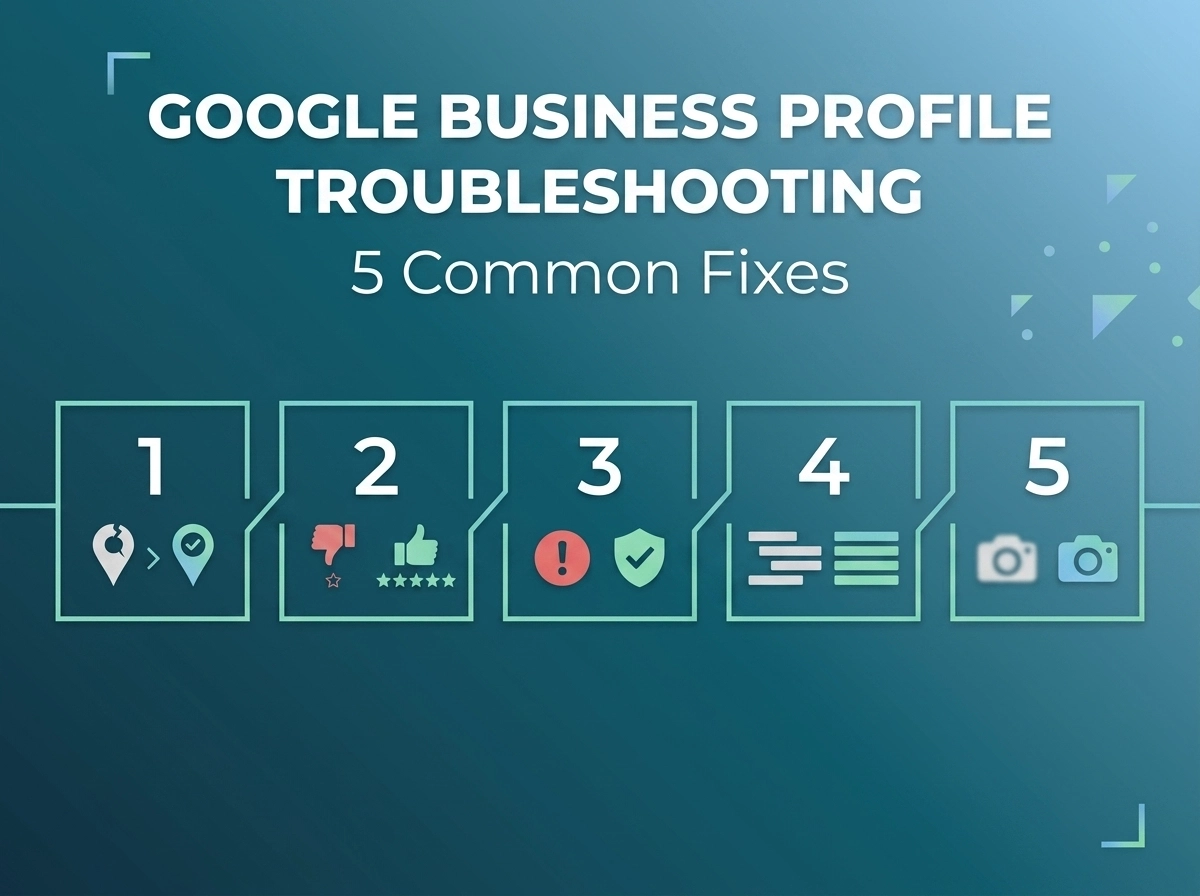
Google Business Profile Troubleshooting: 5 Common Fixes
Few things frustrate a marketing manager or SEO consultant more than logging into their dashboard to find a red alert next to their local listing. One day you are dominating the local 3-Pack; the next, your phone stops ringing because your profile has been suspended, filtered, or altered by an external edit. When your local visibility drops, guessing your way to a solution isn't an option. You need a data-backed, technical roadmap. This step-by-step tutorial breaks down the five most acute Google Business Profile troubleshooting roadblocks and provides the exact execution blueprints to fix them without losing your hard-earned local rank. 1. The Dreaded "Suspended" Status A profile suspension usually triggers after a sudden change to core data (like hours or business name) or when an automated sweep flags an optimization element as a quality guideline violation. Identify the Type Soft Suspension: Your backend dashboard says "Suspended," but your listing is still visible on Maps (you just can't manage it). Hard Suspension: Your business has been completely wiped from public view. Audit for Violations Before appealing, ensure you aren't using a P.O. Box, a virtual office address, or a keyword-stuffed business name. If you are, fix it immediately. Gather Evidence Scan your official business registration, utility bills showing your physical location, and pictures of permanent exterior signage. Submit the Official Appeal Navigate to the Google Business Profile Help community, locate the appeals tool, upload your clean documentation, and track your case ID. 2. The Rogue Duplicate Listing Duplicate listings split your organic ranking authority, confuse customers, and break your citation consistency. They are often created accidentally by users or auto-generated by old scraping bots. Locate the Duplicate's URL Search for your exact business name on Google Maps to find the unverified rogue profile. Check for Reviews If the duplicate has zero reviews: Simply click "Suggest an edit" on the public listing and select "Close or remove" > "Duplicate of another place." If both have reviews: You must contact Google support directly. Provide the URLs of both profiles and explicitly request a review merge. Warning Only attempt a merge if the physical address and business name are identical on both profiles. If they differ, Google's automated system may accidentally delete both listings. 3. Missing or Highly Filtered Customer Reviews You sent a review link to a happy client, they confirmed they left a 5-star rating, but it’s completely invisible to the public. Google’s automated review spam filter has become aggressively strict. Rule Out the Wi-Fi Trap Did the customer write the review while connected to your in-store guest Wi-Fi? Google flags this as a conflict of interest and filters the review. Collect Proof Ask your client to take a screenshot of the review from their Google account contributions page. Contact Support Open a ticket inside your profile management console under "Reviews." Attach the customer’s screenshot and your matching invoice or service contract to prove it was an authentic transactional relationship. 4. The Misplaced Map Pin and SAB Radius Conflicts If your business is a Service Area Business (SAB)—meaning you travel to your clients (like a plumber or mobile consultant)—displaying a physical storefront address where you do not have staff present violates Google's terms and triggers local ranking filtering. Navigate to Location Settings Inside your dashboard, open the "Edit profile" panel and click on "Business location." For Storefronts Drag the map marker pin manually to ensure it rests exactly on your entrance door, not the center of the street grid. For Service Area Businesses Clear your physical address entirely. Instead, toggle the service areas section and define your specific service radius by city names, zip codes, or states (keep it within a realistic 2-hour driving window). 5. Overwriting Unauthorized User-Suggested Edits Google allows community users and map local guides to suggest changes to your operating hours, phone numbers, and website links. If your account doesn't have proactive Google Business Profile management in place, Google may automatically accept these edits. Check Dashboard Alerts Log into your dashboard weekly and look for orange highlights or notification badges indicating "Google updates based on user reports." Review the Changes Carefully look over the suggested edits. If a competitor has suggested you are "Permanently Closed," click "Discard" or "Accept" depending on validity. Protect Your Listing Set up real-time email notifications for profile changes so you can intercept and revert unauthorized modifications within minutes of them going live. Fix Gaps Fast to Protect Revenue Roadblock Core Culprit Resolution Time Impact Level Suspension Guideline drift / Address data conflict 3 to 7 Business Days Critical (Total Blackout) Duplicates Scraping errors / User actions 24 to 48 Hours Medium (Authority Split) Filtered Reviews IP tracking / Over-optimization filters 48 to 72 Hours High (Social Proof Loss) Conclusion Local search troubleshooting requires consistent, detailed attention. For marketing teams managing several entities or consultants handling multiple client profiles, fixing these recurring errors manually can take hours out of your week. Tired of fighting with Google's support dashboard every time an algorithm update rolls out? Let us handle your profile health, security locks, and automated review management.
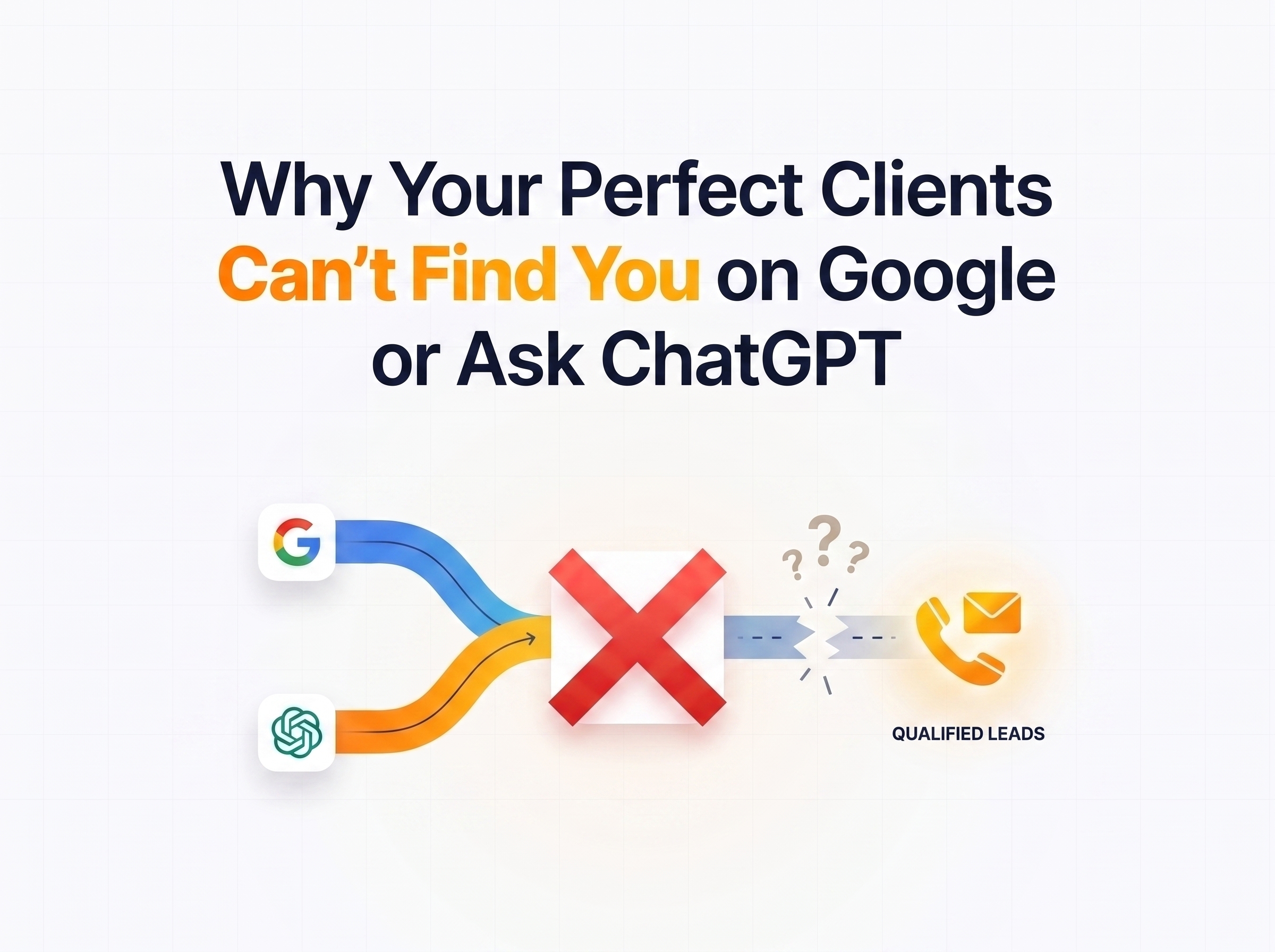
Why Your Next Customer Can't Find You on Google or Ask ChatGPT
It’s 9:15 AM. Your ideal client, the high-value lead you’ve spent thousands of dollars trying to target with retargeting ads, top-of-funnel ebooks, and general PPC campaigns isn't scrolling through your carefully built funnels.Instead, they opened Google or ChatGPT and typed:"What is the best enterprise solution for X, and who actually delivers results without a 6-month onboarding window?"Within 1.5 seconds, the AI engine synthesized dozens of sources, reviewed real customer sentiment, evaluated entity authority, and handed them a curated answer. Before they ever click a single blue link or land on a traditional marketing page, they have already built a "silent shortlist".If your brand wasn't named in that synthesized answer, you didn't just lose a click, you were eliminated from the buying process before it even began.Meanwhile, your marketing budget continues to bleed out on strategies built for 2021. Here is why this shift is happening right now, why traditional marketing budgets are draining fast, and how you can realign your strategy to win in the era of AI search.The End of the Traditional Funnel: Zero-Click & AI ShortlistsFor over a decade, digital marketing operated on a simple exchange: publish content - rank on page 1 of Google- capture the click - collect an email - nurture the lead.That exchange is fundamentally broken.Over 64% of Google searches now end in zero clicks. Google AI Overviews and featured snippets answer the query directly on the search results page.Conversational AI search engines operate with 78% to 93% zero-click rates. Platforms like ChatGPT, Perplexity, and Google AI Mode prioritize direct synthesis over sending users down a rabbit hole of website clicks.The "Silent Shortlist" phenomenon: Modern buyers ask AI engines complex, multi-layered questions to evaluate vendors long before reaching out to sales.When your prospective clients use search or AI today, they aren't looking for broad 2,000-word fluff articles. They are seeking fast, authoritative consensus. If your digital footprint isn't machine-readable or cited across trusted ecosystem touchpoints, AI engines simply won't recommend you.Where Your Marketing Budget Is Actually DrainingIf your cost-per-acquisition (CPA) is creeping up while conversion rates stall, your budget is likely leaking through three major structural holes:Chasing High-Volume, Low-Intent "Vanity Clicks"Paying for broad keywords or pouring resources into generic top-of-funnel blog posts ("What is X?") no longer works. AI engines summarize basic definitions instantly. If your content relies on answering surface-level questions, users digest the summary and bounce draining your ad spend or content budget without driving revenue.Treating SEO and AI Search as Disconnected SilosSplitting your budget between traditional SEO, expensive "AI search growth hacks," and isolated ad channels burns money. Large language models (LLMs) and Google's AI models rely on the same fundamental trust signals: entity authority, clean structured data, digital PR, and verified customer proof.Measuring Clicks Instead of "Share of Model" (SoM)If your primary success metric is still total organic sessions, you are tracking a declining asset. Raw traffic volume is down across the web, but referral quality from AI searches is significantly higher post-AI click visitors convert up to 23% better because they arrive fully informed. Measuring success by surface-level pageviews leads to cutting tactics that actually drive high-intent deals.How to Plug the Leak: A 4-Step Action BlueprintTo stop the budget drain and ensure your brand appears front and center when prospective buyers query Google or ChatGPT, pivot your marketing execution toward these core focus areas:Action PillarWhat to EliminateWhat to Build InsteadContent StrategyGeneric 2,000-word definition articlesProprietary data, original case studies, and clear Q&A formattingTechnical FootprintBloated pages and missing metadataClean Schema markup (JSON-LD) and clear entity associationsDistributionIsolated blog publishingEcosystem presence: Reddit, industry review hubs, podcasts, and digital PRKPI TrackingRaw traffic volume & click-through ratesShare of Model (SoM), pipeline influence, and revenue per referralStep 1: Optimize for "Answer Engine Readiness"Structure key landing pages and insights to give direct answers upfront. Lead with clear, declarative statements within the first 200 words, backed by structured FAQ data and verified stats. AI models prefer citing source material that presents facts directly without fluff.Step 2: Build Brand & Entity Authority Beyond Your SiteChatGPT and Google AI Overviews don't just read your website; they evaluate what the broader web says about you. Invest in digital PR, get featured on respected podcasts, earn reviews on major platforms, and engage in key community forums. When AI scans the Web to form an opinion, positive consensus across third-party sources guarantees your spot on the shortlist.Step 3: Shift Paid Spend to High-Intent "Decision Phase" QueriesReallocate budget away from broad discovery keywords. Focus paid campaigns spend strictly on high-intent comparison, brand defense, and solution-seeking queries where users are ready to take action.Step 4: Track Your Brand's "Share of Model"Audit how LLMs respond to high-intent questions in your niche. Prompt ChatGPT, Perplexity, and Google AI with real buyer questions monthly. Track how often your brand is cited versus competitors, and refine your authority messaging based on where AI tools draw their data.Moving ForwardYour perfect clients haven't stopped searching; they've just stopped clicking on search clutter. They want fast, accurate, synthesised answers to complex problems.By shifting your marketing budget away from high-volume click-chasing and anchoring your strategy in entity authority, clear structural data, and ecosystem visibility, you plug the budget leak and guarantee that when your buyers ask AI for a recommendation, your name is the answer.
Showing 10–18 of 63 articles