Local Growth Insights
Actionable tactics on local search algorithms, proximity grids, Google Maps dominance, and high-converting acquisition.
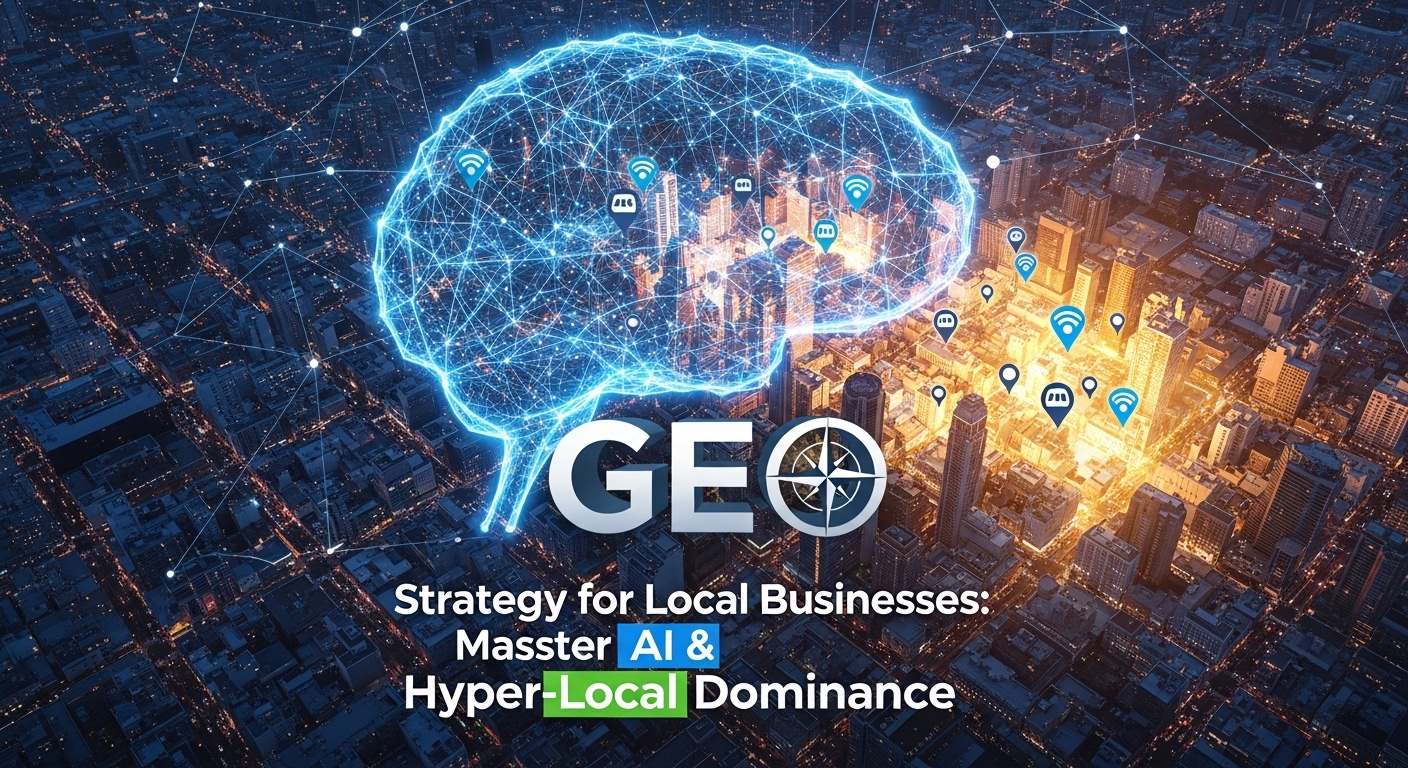
GEO Strategy for Local Businesses: Master AI & Hyper-Local Dominance
SummaryThe Problem: Zero-Click Search. Google AI now answers questions directly on the screen. If they don't click your link, you don't exist.The Shift: We’ve moved from Ranking (being on a list) to Citing (being the answer the AI speaks).GEO (Generative Engine Optimization): This is how we make AI "trust" you. If the AI doesn't see your Schema or Entities, it won't mention your name.CiteFlow’s Job: It automates "Citation Readiness." It turns your messy website into a Knowledge Graph that ChatGPT and Gemini can actually read.Localeadr’s Job: Hyper-Local Domination. We don't just target "Lagos." We target the specific street or neighborhood to win the Google Map Pack.The landscape of search has fundamentally shifted. Traditional SEO, once the bedrock of online visibility, is increasingly failing local businesses as AI-driven answer engines and generative AI Overviews (AIOs) reshape how users find information. Ranking #1 on Google is no longer the full game; if Google's AI answers the query before your link appears, your business might as well be invisible. This post will dissect the critical evolution from traditional SEO to Generative Engine Optimization (GEO), revealing how a robust GEO strategy for local businesses is essential for survival and dominance in 2026 and beyond. We’ll explore the necessity of Citation Readiness and Hyper-Local strategies to secure your position in the new AI-first search paradigm.Why Traditional SEO Is Dying and GEO Is Taking OverTraditional SEO is dying because AI Overviews (AIOs) and generative search results are increasingly answering user queries directly on the SERP, leading to a dramatic reduction in website clicks and rendering conventional ranking metrics obsolete.The rise of AI Overviews (SGE) marks a seismic shift in search. As one Redditor bluntly put it, "Google’s AI (SGE) shows a fat AI answer block at the top and it lists 2-3 sources (IF YOU'RE LUCKY) most users don't really scroll or read and click on your websites." This means that even ranking #1 isn't enough anymore; if Google answers the query before your link appears, your title might never be seen, let alone clicked. Studies cited in Reddit discussions confirm this devastating impact: "A staggering 58.5% of Google searches ended with no click as of late 2024," and “some industries are reporting organic traffic losses of 18-64%, depending on how often their queries trigger AI Overviews.”The core pain point for businesses and agencies, as highlighted in r/digital_marketing, is the "blackbox" nature of influencing AI answers for location-specific questions like "best dentists in Austin." While traditional tactics like Google Business Profile (GBP) optimization and local citations remain important, the difference now lies between merely ranking and being cited as a trusted source by AI.Generative Engine Optimization (GEO) is the strategic approach to ensuring your business is not just visible, but directly cited and recommended by AI-driven search engines and answer engines. It acknowledges that "AI systems pull from sources they understand and trust," necessitating content that is “structured clearly, semantically organised, entity-focused, locally reinforced, and trust-driven.”Zero-Click Search: AI Overviews provide answers directly, bypassing website clicks.Traffic Loss: Organic traffic declines significantly (18-64%) for sites not optimized for AI.Ranking vs. Citing: The goal shifts from appearing high in organic results to being directly referenced by AI.GEO Defined: Optimizing content and site structure for AI interpretation and citation in generative answers.Citation Readiness: How CiteFlow Automates Your GEO StrategyCitation Readiness, a core component of GEO strategy, ensures your digital content is meticulously structured and semantically organized so that AI models can easily understand, extract, and confidently cite your business as an authoritative source in generative search results.CiteFlow is a SaaS platform purpose-built to automate Citation Readiness, transforming how businesses appear in AI-driven answers from Gemini, SearchGPT, and Perplexity. It addresses the critical need for content to be interpreted and trusted by AI, moving beyond traditional keyword stuffing to deep semantic organization. The platform's methodology revolves around three interdependent pillars:1.Entity Reinforcement: AI models rely on understanding entities (people, places, organizations, concepts) and their relationships. CiteFlow identifies, defines, and interlinks these entities within your content, building a robust knowledge graph that AI can easily parse and trust. This ensures that when an AI searches for "best dentists in Austin," it doesn't just see keywords, but a clear, authoritative entity for your dental practice.2. JSON-LD Schema Automation: Structured data is the language AI understands best. CiteFlow automates the creation and deployment of advanced JSON-LD schema, including Article, LocalBusiness, Service, Product, and FAQ schema, tailored for local contexts. This goes beyond basic markup, dynamically injecting rich, context-aware data that explicitly tells AI about your business's offerings, locations, and unique attributes.3. GEO-Optimized Content Templates: Our platform provides templates and guidelines that ensure your content is inherently structured for AI interpretation. This includes clear headings, concise answers to common questions, attribute coverage (e.g., "patio," "dietary options" for a restaurant), and consistent NAP (Name, Address, Phone) information, all designed to make your site a prime candidate for AI citation.A site goes from "invisible in AI results" to "cited source" through a logical progression: unstructured content → CiteFlow's automation of entity reinforcement and advanced schema → AI models easily parse and trust the information → your site is confidently cited as a source in generative answers. CiteFlow is built for content teams, SEO agencies looking to offer AEO/GEO services, and SaaS marketers who understand that the future of search is AI-driven.Automated Entity Reinforcement: Builds AI-readable knowledge graphs for your business.Dynamic JSON-LD Schema: Implements advanced structured data for AI interpretation.GEO Content Templates: Guides content creation for maximum AI citation potential.Target Audience: Content teams, SEO agencies, SaaS marketers.Outcome: Enhanced visibility and direct citation in AI-generated answers.Hyper-Local Domination: How Localeadr Wins the Map Pack in 2026Hyper-Local dominance is achieved by Localeadr through a comprehensive, neighborhood-level strategy that combines technical GEO optimization, meticulous Google Business Profile management, and highly localized content clusters, ensuring businesses appear prominently in Map Packs and local AI Overviews.Local SEO is now more competitive than ever in the AI era. With AI Overviews increasingly providing local answers and "near me" queries being processed by generative tools, simply having a Google Business Profile (GBP) is insufficient. As one Redditor noted, "Your Google Business Profile is not just about being 'set up.' Google is constantly deciding: Who shows up first, Who gets the click, Who gets the call." Localeadr recognizes that for local businesses, visibility equals revenue, especially for high-intent searches like “windshield replacement near me.”Localeadr's methodology for "Hyper-Local" dominance goes beyond generic city pages, focusing on granular, neighborhood-level targeting:Neighbourhood Content Clusters: Instead of broad location pages, we develop interconnected content hubs for specific districts, suburbs, or even blocks within a city. This includes localized blogs about events, news, and services, making the business highly relevant to micro-geographic searches.GBP Optimisation Cadence: We treat GBP not as a listing, but as a "growth system." This involves continuous optimization of every section, categories, services with detailed descriptions linked to website pages, products, updated hours, photos, and proactive review management and response. The goal is to make the profile "more active, more relevant, and more trusted."Technical GEO Strategy: Implementation of local schema markup (LocalBusiness, ServiceArea, GeoCoordinates) for each location and neighborhood, ensuring search engines and AI understand the precise service areas. We also focus on local citations and backlinks from relevant local directories.Map Pack Dominance: By integrating these strategies, Localeadr aims for consistent placement in the coveted Google Map Pack, which is critical for driving calls and foot traffic for local businesses."Hyper-Local" in practice means targeting "city-district-level" rather than broad geographical areas, ensuring businesses are seen by customers actively searching in their immediate vicinity. Localeadr serves local businesses across various niches, delivering outcomes like the documented case of a personal injury law firm scaling from “3 Google Business Profile calls per month to 346.”Neighbourhood Content Clusters: Deeply localized content for micro-geographic targeting.Proactive GBP Optimization: Continuous management for maximum visibility and trust signals.Advanced Local Schema: Precise technical markup for geographic relevance.Map Pack Focus: Strategic efforts to secure top positions in local search results.Outcome: Significant increases in local customer engagement and revenue.Technical Implementation: Schema, FAQ & What Reddit Is Really AskingEffective technical implementation for local GEO strategy involves integrating both Article and LocalBusiness JSON-LD schema to provide AI with comprehensive, structured data about your content and your local presence.For robust GEO strategy, ensure your JSON-LD schema includes both Article and LocalBusiness types where appropriate. An Article schema should wrap your blog posts or informational content, defining its headline, author, and publication details. Crucially, within this Article schema, or separately on relevant location pages, implement LocalBusiness schema. This specifies your business's name, address, phone (NAP), geo-coordinates, business type, opening hours, and services. Combining these allows AI to understand not only “what” your content is about, but also “who” is publishing it and “where” they are located, significantly boosting Citation Readiness.Frequently Asked QuestionsCan we influence AI answers for local businesses (e.g., "best dentists in Austin")?A: Yes, you absolutely can. The key is to implement a robust GEO strategy, focusing on Citation Readiness through structured data, entity reinforcement, and hyper-local content. AI models pull from sources they understand and trust, so making your site AI-ready is paramount.Does traditional local SEO (GBP, citations, location pages) still matter for AI?A: Yes, these foundational elements still matter, but their role has evolved. They serve as critical trust signals and data points for AI. However, they must be augmented with advanced structured data, entity optimization, and hyper-local content strategies to ensure AI can effectively interpret and cite them.What is the impact of SGE/AI Overviews on website traffic for local businesses?A: The impact is significant, with studies showing 18-64% loss in organic traffic for industries affected by AI Overviews. This is because SGE often provides direct answers, reducing the need for users to click through to websites. The focus must shift from driving clicks to being directly cited by AI.How do we optimize for multi-location businesses in the AI era?A: For multi-location businesses, it's crucial to create unique, fully optimized location pages with local schema markup for each branch. Beyond this, implement a consistent GBP optimization cadence across all profiles and develop distinct neighborhood-level content clusters that reinforce each location's local relevance and services.What does "GEO" mean in modern marketing?A: GEO (Generative Engine Optimization) refers to the blend of AI-ready content and precise location targeting designed to get your business found by nearby customers and cited by AI assistants. It ensures your site, listings, and content are structured for confident recommendation by Google, Bing, and generative AI platforms.ConclusionThe era of traditional SEO is yielding to a new paradigm where AI-driven answer engines dictate visibility. For local businesses, the shift from merely ranking to being a trusted, cited source is non-negotiable. Mastering this transformation requires a dual approach: ensuring Citation Readiness through sophisticated structured data and entity reinforcement, and achieving Hyper-Local dominance by meticulously optimizing for Map Packs and neighbourhood-level queries. Whether automating your AI citation strategy with CiteFlow or securing hands-on hyper-local market share with Localeadr, embracing this new GEO strategy is vital. In 2026, those who adapt to AI-first search will not just survive, but thrive, turning the challenge of zero-click searches into an opportunity for unparalleled local authority.
Read Article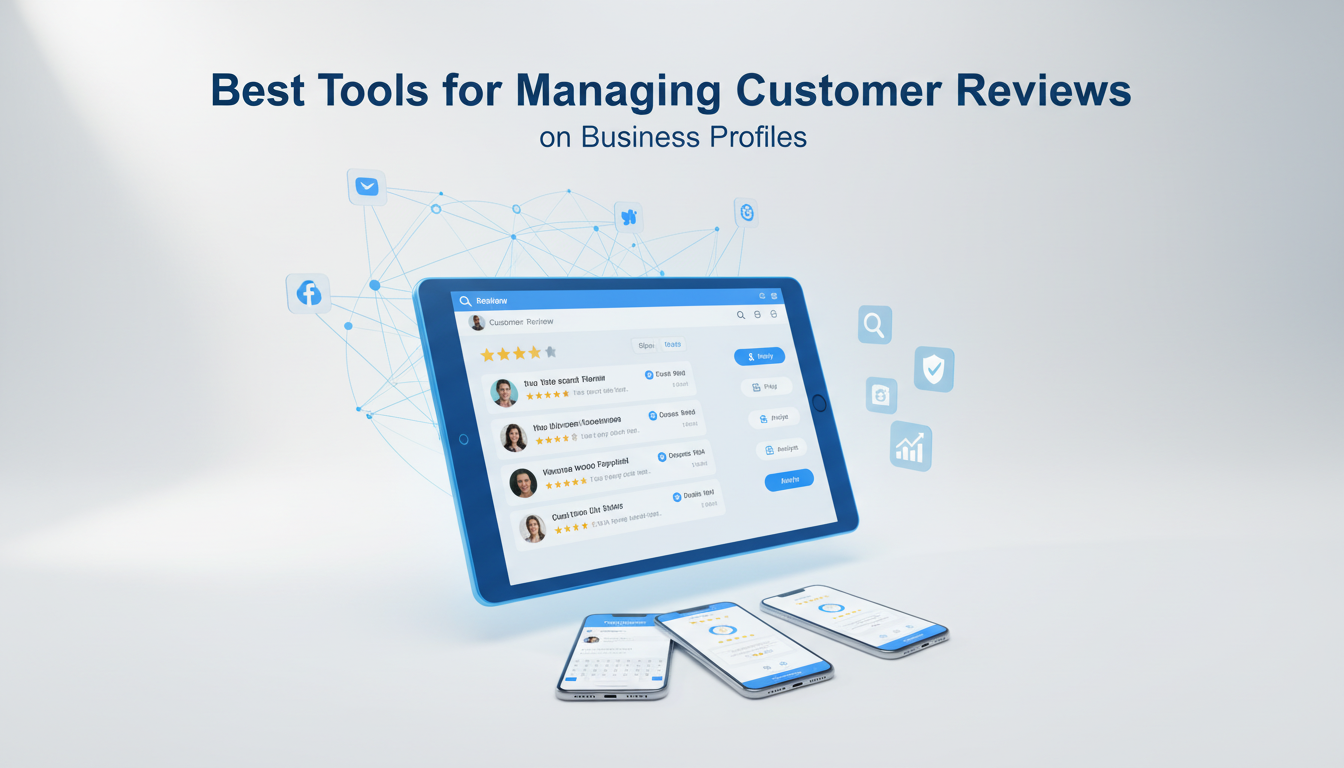
Best Tools for Managing Customer Reviews on Business Profiles
Customer reviews are no longer optional for businesses that want to grow online. Whether you run a local service business, an ecommerce brand, or a multi-location company, reviews directly influence trust, search visibility, and buying decisions. In an hyper-competitive global landscape, your star rating is often the only thing standing between a "Book Now" click and a bounce.The challenge? Reviews don’t live in one place.Customers leave feedback on Google Business Profile, Facebook, Yelp, Trustpilot, and industry-specific platforms. Manually tracking and responding to all of them is time-consuming and that’s where customer review management tools come in.In this guide, you’ll learn:What review management tools areWhy they matter for local SEO and conversionsThe best tools for managing customer reviews on business profilesHow to choose the right tool for your business size and goalsWhat Is Customer Review Management?Customer review management is the process of:Monitoring reviews across multiple platforms to ensure no comment goes unnoticed.Responding to feedback quickly and professionally (because speed is a trust signal).Analyzing sentiment and trends to see if your staff, product, or service needs a fix.Using reviews to improve reputation, SEO, and the overall customer experience.Instead of logging into several platforms daily and losing your mind (and your password), review management tools bring everything into one dashboard. It’s like having a digital storefront manager who never sleeps.Why Managing Customer Reviews Matters for SEO and TrustIf you think reviews are just about "feeling good," think again. In 2026, the data shows that your reputation is a core part of your balance sheet.1. Reviews Influence Local SEO RankingsSearch engines, especially Google, use reviews as a primary ranking factor. Google’s algorithm looks for:Review quantity: How many people are talking?Review quality (ratings): Is the feedback actually good?Review recency: A review from 2023 is ancient history to a 2026 customer.Owner responses: Google rewards businesses that engage. If you ignore your customers, Google ignores you.2. Reviews Build Consumer TrustStatistics show that 93% of users say online reviews impact their buying decisions. A business that:Responds to reviews (even the messy ones)Handles negative feedback professionallyis seen as more credible. In markets like Nigeria, where "trust deficit" is real, a verified 5-star profile is your strongest sales closer.3. Reviews Drive ConversionsHigher ratings and active engagement lead to:More clicks on your websiteMore "Get Directions" requestsMore phone calls and, ultimately, more sales.What to Look for in a Review Management ToolDon’t just buy the most expensive software. Look for a tool that fits your specific workflow:Multi-platform support: Does it cover Google, Facebook, and the niche sites you care about?Centralized dashboard: Can you see everything at a glance?Real-time alerts: You need to know about a 1-star review before it goes viral.Review response tools: Look for AI-assisted drafting or templates.Sentiment analysis: Does it tell you why people are unhappy?Affordability: It needs to pay for itself in saved time and new customers.Best Tools for Managing Customer Reviews on Business Profiles1. Google Business Profile (Built-In Review Management)Best for: Small businesses just getting started.If you’re a solopreneur or a local vendor, this is your home base. It’s the "OG" of review management.Pros: Free, direct impact on Local SEO, and incredibly easy to use.Cons: It only manages Google reviews. If someone drags you on Facebook, you won’t see it here.Ideal for: Solo business owners and startups.2. BirdEye Best for: Growing local and multi-location businesses.BirdEye is the "big leagues." It’s designed for businesses that have reached a scale where manual replies are impossible.Pros: Top-tier automation and AI-powered sentiment analysis that tells you exactly where your business is leaking money.Cons: The pricing can be a bit of a "guava" to swallow for tiny businesses.Ideal for: Multi-location franchises or established clinics.3. PodiumBest for: Businesses focused on messaging and conversions.Podium's secret weapon is the SMS. It realizes that people check their texts way more than their emails.Pros: Unbeatable response rates because it meets the customer where they are.Cons: It’s a premium tool with a price tag to match.Ideal for: Service-based businesses (mechanics, dentists, realtors) who want instant feedback.4. ReputologyBest for: Agencies and reputation-focused teams.If you’re managing reviews for five different clients, Reputology is your best friend.Pros: Deep "drilling" into the data. You can tag reviews by "Customer Service" or "Pricing" to see where the real issues lie.Cons: It’s strictly a reputation tool—no social media posting features.Ideal for: Marketing agencies and franchises.5. Hootsuite (Reviews + Social Media)Best for: Businesses managing social media and reviews together.If you’re already using Hootsuite to schedule your "Motivation Monday" posts, you can use it to manage reviews too.Pros: One login for everything social. Great for team collaboration.Cons: The review features aren't as "surgical" as a dedicated tool like BirdEye.Ideal for: Brands with a massive social media presence.6. Sprout SocialBest for: Mid to large brands focused on insights.Sprout is for the data nerds. It provides world-class reporting that makes you look like a genius in board meetings.Pros: Beautiful UX and powerful "listening" tools that track your brand across the web.Cons: It’s expensive. This is an investment, not just an app.Ideal for: Corporate marketing teams and data-driven enterprises.7. TrustpilotBest for: Ecommerce and online brands.Trustpilot is the gold standard for "Social Proof." That green logo is a universal symbol that you aren't a scammer.Pros: Massive brand recognition. If you have a 4.5 on Trustpilot, people buy without thinking twice.Cons: It’s more of a "certificate" than a management tool for local Google reviews.Ideal for: Online stores and SaaS companies.How to Use Review Management Tools EffectivelyDon't just buy a tool and let it sit. You need a strategy:Enable instant alerts: Silence is consent. Address issues immediately.Respond to EVERY review: Yes, even the one from the guy who was clearly having a bad day. It shows you’re active.Personalize: Use the customer’s name. Avoid "bot-like" behavior.Showcase your wins: Take those 5-star Google reviews and plaster them on your Instagram and website.Close the loop: If someone complains about your staff, use that tool's report to train your staff.Frequently Asked QuestionsDo review management tools help with SEO?Absolutely. Google sees frequent, high-quality reviews and owner responses as a sign that your business is "alive" and relevant. This pushes you up the Map Pack.Can one tool manage all my reviews?Most "all-in-one" tools cover the big hitters (Google, Facebook, Yelp). However, niche platforms (like TripAdvisor or Jumia) might require specific integrations.Are free tools enough?If you have under 5 reviews a month, yes. If you’re serious about scaling and want to save 10+ hours a week, a paid tool is the best investment you’ll make this year.ConclusionIn 2026, managing customer reviews is no longer just about reputation, it’s about visibility, trust, and growth. Your potential customers are reading your reviews right now. What are they seeing?The best tool is the one that fits your current size but allows you to grow. Start with Google for free, but don't be afraid to level up to a tool like Podium or BirdEye when the volume gets loud.
Multi-Location Schema: How to Use Local Business JSON-LD
Managing technical SEO for a single-location brand is straightforward: you write a clean JSON-LD block, nest your Name, Address, and Phone number (NAP), add your coordinates, drop it in the footer, and call it a day. But when you are scaling across 50, 500, or 1,000+ branch locations, that manual approach breaks completely. For enterprise brands and technical SEO consultants, managing multi-location schema architecture presents a massive scalability problem. If it is handled poorly, you risk silent data drift, conflicting data points that confuse Google’s Knowledge Graph, and rich snippet degradation. This guide breaks down how to architect a scalable, programmatic local business schema framework that connects parent brands to individual branches cleanly, without triggering automated quality flags. The Scalability Wall: Why Standard JSON-LD Fails at Scale Most standard schema implementations treat every location as an isolated island. For an enterprise site, this results in thousands of unlinked, disparate <script> tags across various landing pages. When Googlebot crawls a multi-location site, it attempts to resolve entities connecting real-world objects (like physical storefronts) to abstract concepts (like your corporate brand). If your branch pages contain flat, generic LocalBusiness strings without structural relationships, Google has to guess how they fit together. Your Corporate Website/locations/chicago- Flat, unlinked LocalBusiness Code Your Corporate Website/locations/houston- Flat, unlinked LocalBusiness Code Your Corporate Website/locations/new-york- Flat, unlinked LocalBusiness Code This structural gap creates serious engineering and optimization friction: The Plugin Trap:CMS plugins often generate standard, rigid fields that cannot handle complex relationships like unique department hours or multi-tier corporate parentage. The Maintenance Overhead: If your brand updates its core corporate identifiers or changes a centralized social handle, manually pushing updates across thousands of hardcoded pages introduces significant room for error. To scale smoothly, your schema must transition from flat data strings to a true semantic graph network. Entity Resolution: Mapping Parent-Child Hierarchies To build a clean graph, you must use explicit relational properties to define the hierarchy between your global brand headquarters and individual regional storefronts. Schema.org gives us two primary properties to handle this relationship: parentOrganization: Declares that a specific branch is owned by a larger corporate entity. subOrganization or department: Declares that a larger entity contains smaller operational units or branches. For a multi-location architecture, defining this from the branch level upward via `parentOrganization` is generally the most efficient path. This approach allows you to inject unique local variables into the branch page while anchoring it back to a single, authoritative parent node. The "sameAs" Graph Bridge: Establishing Entity Trust Search engines do not rely on your website alone to confirm that your business locations exist. They constantly compare your on-site data against trusted, high-authority third-party web directories. You can explicitly point search engines to these authoritative sources using the `sameAs` array within your schema markup local business nodes. This step maps your internal web entities directly to external reference points in the global Knowledge Graph. To optimize your entity trust, include these three distinct layers in your `sameAs` arrays: Strategic Knowledge Base URIs: Include links to your verified entity pages on Wikidata or Wikipedia. These platforms act as root authorities for semantic web crawlers. First-Party Maps & Spatial Profiles: Add direct links to your official Google Maps Place URL, Apple Maps profile, and Bing Places profile. Primary Core Citation Vectors: Include URLs to your high-authority, industry-specific directories (such as Yelp, TripAdvisor, or Avvo). Common Multi-Location Pitfalls (And How to Resolve Them) When scaling code across hundreds of pages via programmatic templates, small oversights can create site-wide errors. Here is how to audit and fix the most common multi-location edge cases. Conflicting Shared Identifiers A common mistake in programmatic generation is using the same corporate phone number or main office address across all regional branches. This creates data conflicts that can dilute your local search footprint. The Fix:Ensure your database schema strictly enforces unique local telephone lines and precise geo coordinates (resolved to 4 decimal places) for every single branch entry. Broken openingHoursSpecification Overrides Standard opening hours often shift during holidays, seasonal peaks, or unexpected closures. If your schema does not reflect these changes, it can create a mismatch with your active Google Business Profile data. The Fix: Use the `validFrom` and `validThrough` properties within your `OpeningHoursSpecification` blocks to programmatically inject temporary holiday hours that override default schedules. { "@type": "OpeningHoursSpecification", "opens": "00:00", "closes": "00:00", "validFrom": "2026-12-25", "validThrough": "2026-12-25", "description": "Closed for Christmas Day" } Scaling Your Semantic Infrastructure Deploying robust local business schema across a large multi-location footprint requires shifting from static text updates to a programmatic, graph-based architecture. Building clean entity relationships and managing automated data delivery helps protect your brand's presence in search results and rich snippets at scale. If your internal development team is facing bandwidth constraints or managing a complex code deployment, outsourcing to an expert team can streamline the process. Ready to clean up your brand's data graph? Partner with Localeadr’s engineering team to deploy a high-performance, fully automated enterprise data pipeline. Explore our tailored schema implementation service today.
How to Attract Local Buyers with Blog Post Content.
You know your business. You know your community. But when it comes to digital marketing, you face a frustrating roadblock: a total lack of knowledge regarding specific content strategies that successfully drive engagement and sales from local customers.You publish posts. You write blogs. Yet, the phone stays silent. Why? Because broad content does not win local markets. If you want to attract local buyers, you need a hyper-focused local SEO content strategy.Imagine you're a family dentist in Toronto. You have a state-of-the-art clinic, a brilliant team, and stellar service. But when a parent two kilometers away searches for "pediatric dentist near me," your competitor gets the click. Your competitor isn't a better dentist. They just have better local search signals. They understand the types of contents that tell search engines exactly where they are and who they serve. They are capturing the exact local buyers you are missing out on.Let's fix your strategy. Here is how you turn neighborhood searchers into loyal, paying customers.Why Most Local Campaigns Miss the MarkMany businesses treat their website like a global brochure. They write generic articles. They use broad keywords. This is a massive mistake.Local search is driven by immediate need. When someone searches for a plumber, a lawyer, or a cafe, they want a solution right now, right down the street. They are not looking for a theoretical essay. They want to know your hours, your location, and if you can solve their problem today.To capture this intent, your content must anchor itself to your geography. It must feed data directly into the local map packs. It must build trust through proximity and relevance.The Core Types of Contents That Drive Local SalesIf you want to dominate your local market, you need to deploy specific content formats. These formats signal relevance to search engines and build immediate trust with local buyers.1. Geo-Targeted Service Area Pages (SAPs)Do not lump all your services onto one page. Create dedicated landing pages for every service in every location you target.If you offer HVAC repair, do not just write "HVAC Repair." Write "HVAC Repair in [City Name]."Best practices for SAPs:* Include your exact Name, Address, and Phone number (NAP).* Embed a Google Map of your location.* Add photos of your team working in that specific area.* Feature reviews from customers in that exact neighborhood.2. Google Business Profile (GBP) UpdatesYour Google Business Profile is your most valuable local asset. It dictates your presence in the local map pack. But GBP is not a "set it and forget it" tool. It is a dynamic content platform.Use GBP posts to publish:Weekly updates and seasonal promotions.Answers to common customer questions.New product announcements.Google gives you 1500 characters per post. Use them. Inject local keywords naturally. Keep your profile active. Active profiles rank higher.3. Hyper-Local Blog PostsDitch the generic industry news. Write about what matters to your community.Event Roundups: The Best Summer Festivals in [City].Local Partnerships: Highlight a local charity you support.Location-Specific Advice: How to Protect Your Roof from [City]'s Harsh Winters.This content earns local backlinks. Local newspapers and community blogs will link to you if you write about them. These local citations act as massive trust signals for search engines.4. Localized Case Studies and TestimonialsSocial proof is critical. But local social proof is unbeatable.When a prospect sees a video testimonial from a business owner down the street, trust skyrockets. Build a portfolio of local success stories. Detail the specific problem, the neighborhood it occurred in, and how your business solved it.The Power of Voice Search in Local ContentWe cannot discuss local lead generation without addressing how people search today. A massive percentage of local queries are now spoken, not typed. Consumers are asking their smart speakers and smartphones for immediate recommendations.How Voice Search Changes ContentWhen people type, they use shorthand: "Toronto dentist."When people speak, they ask full questions: "Who is the best family dentist in Toronto open on Saturdays?"To capture this voice traffic, your local SEO content must be conversational.Build robust FAQ pages: Answer the exact questions your customers ask on the phone. Use the question as a header, and answer it immediately in the first sentence.Target long-tail keywords: Voice searches are naturally longer. Optimize for phrases like "how much does it cost to fix a leaking pipe in [City]" rather than just "pipe repair."Focus on proximity context: While you cannot physically optimize for the phrase "near me," you can optimize for the exact coordinates and neighborhood names that search engines use to calculate proximity. Mention local landmarks, cross streets, and adjacent neighborhoods.This simple shift in how you write will dramatically increase your visibility in voice-assisted local searches.How to Create a Local SEO Content DistributionCreating the content is only half the battle. You must distribute it where local eyes are looking.Nail Your NAP ConsistencyYour Name, Address, and Phone number must be identical everywhere. Your website, your GBP, local maps, and chamber of commerce directories must match perfectly. Search engines use these citations to verify your existence. Inconsistent data destroys trust and tanks rankings.Dominate the Local Map PackThe map pack is the ultimate goal of local search. To get there, your website content and your GBP must work in harmony. Ensure the categories you select on GBP are reflected as dedicated service pages on your website.Earn Local BacklinksGlobal backlinks are great. Local backlinks are better. Sponsor a local sports team. Join the local chamber of commerce. Host a community workshop. When these local organizations link back to your site, search engines view you as an embedded, authoritative community pillar.Turning Local Traffic Into Foot TrafficTraffic means nothing if it does not convert. Your local SEO content must be built for action.Optimize for Mobile FirstOver 60% of local searches happen on mobile devices. People are walking down the street, looking for your service. If your site takes five seconds to load, they will bounce to your competitor. Make your phone numbers clickable. Put your address and business hours front and center.Use Strong, Clear Calls to Action (CTAs)Do not be passive. Tell the local buyer exactly what to do next.Call our [City] office today for a free quote.Get directions to our downtown showroom.Book your appointment with [City]'s top-rated team.Local buyers are actively looking to spend money. They already have the intent. Your job is to eliminate friction. By deploying these specific types of contents, you stop being a digital ghost and become the undeniable local authority.Stop guessing. Start targeting. Build content that speaks directly to your neighborhood, and watch your local lead generation soar.
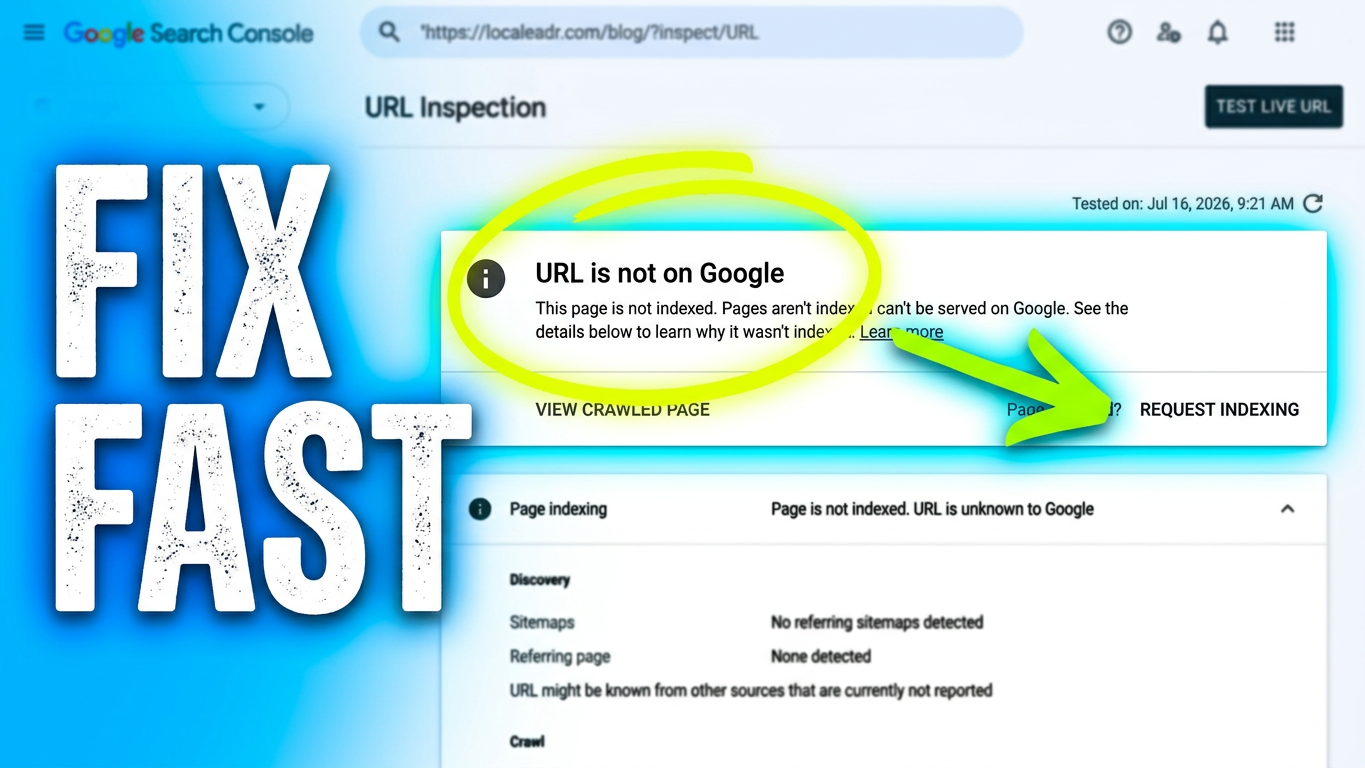
How to Speed Up Google Indexing with the URL Inspection Tool
If you've ever published a new page or updated an old one and then spent days refreshing Google, waiting for it to show up, you already know the problem: Google doesn't crawl your site the second you hit publish. It crawls on its own schedule, based on your site's authority, crawl budget, and how often Google thinks your pages actually change. The good news is you don't have to just wait it out. Google Search Console has a built-in tool that lets you nudge Google directly and ask it to crawl a specific URL sooner rather than later. It's called the URL Inspection tool, and if you're not using it every time you publish or update a priority page, you're leaving speed on the table. How to Use the URL Inspection Tool Step 1: Open URL Inspection in Google Search Console Log into Google Search Console and select the property for your website. At the top of the dashboard, you'll see a search bar. This is the URL Inspection tool. Paste in the exact URL of the page you just published or updated, then hit enter. Google will pull up a report on that specific URL. This report is doing more than telling you a status; it's showing you exactly how Google sees that page right now, which is the first thing you need to know before you ask for anything. Step 2: Check Whether the URL is Already Known to Google The report will tell you one of two things: either the URL is already on Google, or it isn't. If it's a new page, you'll usually see a message saying the URL isn't on Google yet. If it's a page you've updated, you'll see when Google last crawled it and if that date is old, that's your signal the update hasn't been picked up. Either way, don't stop here. Before requesting anything, run the Live Test. This is a separate check inside the same tool, and it tells you how the page looks to Google right now, in real time, rather than relying on Google's last crawl. It checks whether the page loads properly, whether it's blocked by robots.txt, whether there's a noindex tag sitting on it by accident, and whether it's actually eligible to be indexed at all. This step matters more than people realize. Requesting indexing on a page that's technically broken or accidentally blocked is a wasted request; Google will just hit the same wall again. The Live Test catches that before you waste your ask. Step 3: Request Indexing Once the Live Test comes back clean page is live, no blocking issues, eligible for indexing you'll see a button appear: Request Indexing. Click it. This is Google Search Console's way of saying "add this URL to the priority crawl queue." It doesn't guarantee instant indexing, and it isn't meant for bulk use across your whole site. But for a single priority page, a new service page, a money page, or a big content update, it's the fastest legitimate way to get Google's attention on that specific URL. You'll see a short confirmation message once the request goes through. From there, it's a matter of hours to a few days for most sites, rather than the days-to-weeks timeline you'd get from just waiting on Google's normal crawl cycle. Best Practices and Strategic Usage When to Actually Use This Tool This tool is not something to run on every single page every day. Google limits how many manual requests you can submit, and spamming it won't speed anything up. Use it with intention, on pages that matter most: A new page you just published that you want ranking as soon as possible. A page where you made a significant content update (not a typo fix). A page that's been sitting un-indexed for longer than it should. For everything else, let your normal crawl cycle, sitemap, and internal linking do the work. The Bigger Picture Requesting indexing manually is a tactic, not a strategy. It gets one page in front of Google faster, but it won't fix a site with weak internal linking, thin content, or crawl budget issues across hundreds of pages. If you're regularly finding pages that won't index no matter how many times you request it, that's usually a sign of a deeper technical or content quality issue worth auditing. But for the everyday case, you just published something important and you don't want to wait a week for Google to notice the URL Inspection tool is the fastest, most reliable way to move that along. Five minutes in the Search Console, and you've done everything within your control to get that page live in search.

Your 4-Phase Agentic SEO Checklist: Entity Audit, Schema, Content Structure, and WebMCP
Over the past fourteen posts in this series, we have covered the individual components of the shift that Google I/O 2026 has set in motion: AI Mode and zero-click search, Ask Maps and conversational local discovery, WebMCP and agent-readable websites, the removal of FAQ rich results, reasoning-mode citations, and the analytics infrastructure to measure all of it.This post is the synthesis of a single, ordered implementation roadmap that brings all of those threads together into a practical plan for the rest of 2026 and beyond.The framework is structured in four sequential phases. Each phase builds on the one before it. Each has clear actions, a validation method, and a primary performance indicator. You do not need to complete everything at once. But you do need to work through them in order, because the later phases depend on the foundations the earlier ones establish.Why the old SEO model is no longer sufficient on its ownBefore the roadmap, the context. Traditional SEO optimisation keyword research, on-page optimisation, link building, technical health remains necessary. It is not being replaced. But it is no longer sufficient as a standalone strategy.The reason is that the primary interface through which users encounter search results is changing. In AI Mode, users interact with a synthesised response, not a list of links. In Ask Maps, they get a conversational answer drawn from business profiles and reviews. In reasoning-mode AI research, they receive a structured analysis built from multiple cited sources. In all of these interfaces, the criteria for visibility are different from traditional SERP ranking criteria.A site can rank first for its target keywords in traditional search and be entirely absent from the AI-driven surfaces that are now handling a growing share of user queries. Closing that gap requires a different set of optimisations specifically, the four phases outlined below.Phase 1: Entity AuditPrimary performance indicator: Increase in direct brand queries and Knowledge Graph consistency Validation method: Cross-reference brand descriptions across knowledge panels, social profiles, and company pages using automated audit toolsThe foundation of visibility in AI-driven search is entity recognition. Before an AI system can cite your brand, recommend your business, or include you in a conversational answer, it needs to be able to identify who you are with confidence. That identification depends on consistent, structured, verifiable information about your brand across the web.Entity authority is established through the consistency and quality of your brand's information footprint. This includes your Google Knowledge Panel, your Wikipedia presence (if applicable), your Wikidata entry, your social media profiles, your website's About and contact pages, and any third-party directory listings or professional association pages that reference your business.The audit process involves identifying every major location where your brand is described online and checking for consistency. Brand name spelling, company description, founding information, service categories, geographic coverage, and contact details should all match accurately across every source. Inconsistencies confuse entity resolution, the process by which AI systems determine that multiple references to a business name all refer to the same entity.Common issues found in entity audits include: social media profiles with outdated brand descriptions, third-party directory listings with old addresses or phone numbers, Knowledge Panel information that does not reflect current service offerings, and missing or incomplete Wikidata entries that prevent cross-referencing across AI knowledge sources.Fix inconsistencies systematically, starting with the highest-authority sources. Claim and update your Google Knowledge Panel. Ensure your Wikidata entry exists and is accurate. Verify that your sameAs schema references on your website point to current, live social profile URLs. These corrections create a coherent entity signal that AI systems can identify and trust.Phase 2: Structured Schema DeploymentPrimary performance indicator: Enhanced visibility within AI Overviews and Ask Maps citations Validation method: Rich Results Test, Schema Markup Validator, and structured data testing for Knowledge Graph validationWith a clean entity foundation in place, the next phase is deploying structured schema that makes your content machine-readable in the specific ways that AI systems and Google's Knowledge Graph require.Organisation schema is the starting point for most businesses. Implemented as JSON-LD in your site's <head>, it declares your organisation's name, URL, logo, contact information, and critically sameAs references that link your website entity to your social media profiles, Wikidata entry, and other authoritative web presences. This is what allows Google to connect your website entity to its broader understanding of your brand across the web.LocalBusiness schema is essential for any business with a physical location or service area. It extends Organisation schema with address, geographic coordinates, opening hours, service area, and price range. For multi-location businesses, implement separate LocalBusiness schema instances for each location, each with accurate, location-specific data. This is the structured data that feeds into Ask Maps and local AI Overview citations.Service schema documents the specific services you offer, each with a name, description, and where applicable, a price or price range. Writing service descriptions in natural language within your schema rather than just using category labels gives AI systems richer semantic content to match against conversational queries.Review and AggregateRating schema should be implemented on pages where genuine customer reviews appear. This surfaces review data to AI systems and provides trust signals that influence citation confidence.After implementation, validate every schema instance using Google's Rich Results Test and the Schema Markup Validator. Resolve any errors before moving to Phase 3. Broken schema is worse than no schema; it creates incorrect signals that can actively harm entity understanding.Phase 3: Content Structuring for AI ExtractionPrimary performance indicator: Citation frequency in AI Overviews and extended reasoning paths Validation method: Feed key pages into an AI language model and verify that extracted summaries accurately match the page's intended meaning and informationClean entity signals and accurate schema tell AI systems who you are and what you do. Phase 3 determines whether the content they find when they visit your pages is extractable, citable, and trustworthy enough to include in AI-generated answers.Answer-first structure is the single most important content principle for AI extraction. Every page should lead with its core answer, finding, or recommendation not with context, background, or introduction. The context and support follow the answer. An AI system reading your page should be able to identify the primary response to the implied query within the first two or three sentences of the page, or within the first sentence under each major heading.H1–H3 hierarchy with functional headings means that each heading should function as a standalone proposition, a complete, meaningful statement that communicates useful information even without the surrounding body text. Headings that exist only for structure ("Introduction," "Overview," "Conclusion") provide no extractable signal. Headings that state a finding or recommendation ("AI Overviews reduce organic CTR by 58% for top-ranking pages") are far more useful to AI systems constructing a research summary.Self-contained content chunks means that each major section of a page should make sense if read in isolation. Avoid prose that assumes the reader has read the preceding section, and avoid conclusions that only make sense in the context of an argument built across multiple paragraphs. AI systems extract sections, not entire pages. Sections that are internally coherent are extractable; sections that depend on context from elsewhere in the document are not.Eliminate low-value content. Pages that exist primarily for keyword coverage without providing genuine value thin location pages, auto-generated category pages, near-duplicate content reduce the overall quality signal of your site and dilute the topical authority that AI systems use to assess citation worthiness. Audit your content inventory, consolidate where possible, and remove pages that cannot be improved to a standard worth extracting.The validation test for Phase 3 is practical: take each of your key pages and paste the content into an AI language model. Ask it to summarise the main point, the evidence used to support it, and the recommended action. Compare the output to what you intended the page to communicate. Where the summary does not match the intent, the page needs restructuring.Phase 4: WebMCP ActivationPrimary performance indicator: Completed conversions and task executions by AI browser agents Validation method: Lighthouse 13.3 Agentic Browsing audit; Chrome DevTools Protocol monitoring for tool registration eventsThe first three phases establish your brand's authority, structured identity, and content quality for AI reading and citation. Phase 4 goes further making your website usable as a tool by AI agents that are trying to complete tasks on behalf of users.Create llms.txt and llms-full.txt at your domain root. These files provide AI agents with a structured map of your site, what it is for, who it serves, and where to find the most important content. As covered in Day 12 of this series, this file is now audited by Lighthouse 13.3 and serves as a foundational agent-readiness signal.Implement the Declarative API on high-intent pages. Identify the pages on your site where users complete the most valuable actions booking forms, enquiry forms, quote requests, purchase flows. Apply WebMCP toolname and tooldescription attributes to the form elements on these pages. This makes these interactions explicitly discoverable and executable by AI browser agents without requiring any new JavaScript. A booking form with a clear WebMCP tool declaration is visible to an agent as "this is where you book an appointment." A form without that declaration requires the agent to infer function from visual design, which is far less reliable.Register complex tools with the Imperative API. For dynamic web applications e-commerce sites with variable product availability, service booking systems with real-time slot management, configuration tools that change based on user input implement the Imperative API using navigator.modelContext.registerTool() to register and update tool availability in real time as page state changes.Pass the Lighthouse 13.3 Agentic Browsing audit. Run Lighthouse 13.3 in Chrome 146 Canary with the #enable-webmcp-testing flag enabled. Work through the Agentic Browsing category results systematically: verify your llms.txt is in place and returning a 200 status, resolve any accessibility tree integrity issues on interactive elements, address CLS violations that would prevent reliable agent interaction, and confirm that your high-intent pages have registered WebMCP tools.Implementation timelineThe four phases are designed to be sequential, but they do not need to be consecutive. A realistic implementation timeline for most businesses looks like this:Weeks 1–2: Entity audit — identify and resolve inconsistencies across your brand's information footprint. Claim and update Knowledge Panel, verify Wikidata, fix sameAs schema references.Weeks 3–4: Schema deployment — implement and validate Organisation, LocalBusiness, Service, and Review schema across all relevant pages.Month 2: Content structuring — conduct a full content audit, restructure key pages for answer-first extraction, consolidate or remove low-value content.Month 3: WebMCP activation — create llms.txt, implement Declarative API on high-intent pages, run Lighthouse 13.3 audit, and prioritise Imperative API implementation for dynamic pages.Ongoing: Citation monitoring, content expansion into comparison and selection-stage topics, and monthly review of AI Mode performance data in Search Console.The strategic framingEverything in this checklist is built on one central principle: in the agentic search era, visibility is not earned by ranking. It is earned by being the source that AI systems trust, extract from, and act through.Entity authority tells AI systems that you are a real, verifiable, consistent brand. Structured schema tells them what you do and where you do it. Content structure tells them that your information is accurate, well-organised, and safe to cite. WebMCP tells them that your website is usable as a tool, not just readable as a document.Each phase builds toward a site that AI agents can trust completely to cite in answers, to recommend in research, and to use to complete tasks on behalf of the users they serve.That is the standard to build toward. And the businesses that build toward it now, while most competitors are still optimising exclusively for the ranking positions that no longer guarantee the visibility they once did, will have a structural advantage that compounds over time.This post is the final entry in our 15-day Google I/O 2026 search update series. If you have been following the series and want help implementing the 4-phase framework for your business, get in touch. We offer phased agentic SEO engagements designed to work through each phase systematically with the expertise and tools to do it properly.
Local SEO AI Visibility On-Page Optimization: Navigating the New Search
Traditional SEO is evolving into Generative Engine Optimization (GEO). It is no longer enough to simply rank #1; businesses must now be cited by AI models like ChatGPT, Gemini, and Google’s Search Generative Experience (SGE). This shift represents both a challenge and a monumental opportunity for businesses to capture new traffic streams by becoming the "source of truth" for AI. The "Win" Strategy: Core Principles To succeed in the era of AI, businesses must move beyond traditional keyword chasing and adopt a holistic approach to visibility. From Keywords to Intent: Stop chasing single words. Build "Question Clusters" that answer the full intent of a local customer's query. Structure for Citations: Use JSON-LD Schema and "quotable" introductory sentences. If AI cannot parse it, it will not cite it. GBP as the Source of Truth: Your Google Business Profile (GBP) is the primary verification tool for AI. Keep NAP (Name, Address, Phone) data 100% consistent. Information Gain: AI ignores "copy-paste" content. Use unique local data, specific case studies, and expert quotes to stand out as an authority. Technical Health: If your site is slow or unindexed, you do not exist to AI. Technical SEO remains the foundation of visibility. How GEO Enhances Local Visibility Generative Engine Optimization enhances local visibility by strategically structuring content to be discoverable and cited by AI. This approach shifts the focus from traditional rankings to "AI citations" and "full intent" question clusters. Becoming "Authoritative Enough" for AI The core of GEO is making content authoritative enough for AI models to pick it up as a source. This means moving beyond keyword stuffing and embracing content that answers user questions with precision. For local businesses, this involves optimizing for common queries—such as "plumber near me"—and presenting services in a digestible, quotable format. Strategies like using stats, quotes, and structured lists make content more excerptable and trustworthy for Large Language Models (LLMs). On-Page Optimization Tactics Driving AI visibility requires creating highly structured, intent-focused, and technically sound content. The Role of Structured Data and Content Quality Integrating JSON-LD schema is crucial, as it provides explicit signals to AI about your business name, address, phone number, services, and reviews. Beyond schema, the quality of content is paramount. Since Google’s March 2024 update, "helpful content" is integrated into core ranking; well-researched, comprehensive articles that answer user queries directly are significantly more likely to be cited by AI. The Impact of Google Business Profile and Local Citations Google Business Profile (GBP) and consistent local citations are foundational. They provide verified, authoritative information that AI models use to confirm business details. Building Trust Through Consistency A 2024 BrightLocal study found that 87% of consumers use Google to evaluate local businesses. An optimized GBP acts as a verified entity that AI can confidently reference. Furthermore, local citations mentions of your business on other websites reinforce your legitimacy. When these details are consistent, they signal to AI that your business is a real, active entity within its geographic area. Content Strategy for AI and Local Intent Content strategy must pivot toward "question clusters" and "full intent" rather than isolated keywords. Designing for Extractability Developing content for tools like Perplexity and ChatGPT requires a conscious effort to be "extractable." This includes: Crafting clear, summary-style introductions. Using headings and subheadings effectively. Incorporating short, quotable definitions and statistics. Testing content via manual AI prompting to refine how your information is presented in generative answers. Technical SEO and Performance Metrics Technical SEO ensures that content is accessible and crawlable, which AI models consider when evaluating source credibility. Foundations of Visibility A fast, stable, and mobile-friendly website signals reliability. If a page is not indexed, it is invisible to both traditional search and AI. Regularly auditing for broken links, optimizing image sizes, and maintaining a clear site structure are essential to ensuring your site is deemed authoritative enough to be cited. Quick Wins and Workflow Adjustments For businesses looking for immediate impact, the following adjustments can improve GEO performance: Think in Question Clusters: Analyze the various ways users ask about your services and ensure your content addresses all angles. Manual AI Testing: Prompt AI tools with variations of your target questions to see how your content performs, then adjust your intros and definitions accordingly. Incorporate Excerptable Elements: Add structured lists, statistics, and direct quotes to your most important pages to make them easier for AI to extract. Maintain GBP Accuracy: Ensure your Google Business Profile is fully optimized and updated, as it remains the primary source for local AI answers. Conclusion Navigating the evolving search landscape requires a strategic blend of traditional SEO wisdom and forward-thinking GEO. By prioritizing intent-driven content, leveraging structured data, and maintaining a robust Google Business Profile, you can ensure your business is cited as an authoritative source. The journey to enhanced AI visibility is ongoing, but a proactive approach to content restructuring and technical refinement will position your brand to thrive in the future of search.
The llms.txt File: The 30-Minute Technical SEO Task That Makes Your Site AI-Readable
Most technical SEO tasks take weeks to plan, get signed off, develop, and deploy. The llms.txt file is the exception. It is a plain text file written in markdown, placed at your domain root, and readable by any AI agent or large language model that visits your site. Creating a solid one takes about thirty minutes. It is also now audited by Google Lighthouse 13.3 as part of the new Agentic Browsing category, which means it is no longer just a good practice. It is a measurable technical signal that auditors, developers, and AI agents can all evaluate. What llms.txt Is and Where It Lives The llms.txt file is a plain markdown document placed at the root of your domain, accessible at yourdomain.com/llms.txt. It is the AI-era equivalent of robots.txt a standardised, machine-readable file at a predictable location that tells automated systems something important about your site. Where robots.txt tells crawlers which pages they can and cannot access, llms.txt tells AI agents and language models what your site is for, what it contains, and which pages are most important. It provides context that helps an AI agent navigate your site purposefully rather than having to infer your site's structure from HTML alone. The format consists of a concise site description followed by a structured list of key pages, each with a plain-language description of what that page covers and why it matters. An extended version llms-full.txt can include more detailed content from key pages for AI systems that benefit from richer context. Why It Now Matters for Technical SEO There are two distinct reasons why llms.txt has moved from optional to important. The Lighthouse Audit Google Lighthouse 13.3 introduced an Agentic Browsing audit category that evaluates how well a site supports machine interaction. One of the deterministic checks in this category is whether a valid llms.txt file exists at the domain root and returns a 200 HTTP status code. A missing or broken llms.txt file is flagged as an audit failure in the Agentic Browsing category. The Google Search team has stated that llms.txt is not a direct ranking signal for traditional search results. Your rankings will not improve tomorrow because you created the file. But the Chrome team's decision to include it in Lighthouse reflects its role in a different context: browser-agent readiness. AI agents operating inside Chrome use the Agentic Browsing audit signals to assess how navigable a site is. A site that passes the llms.txt check is telling those agents that it has considered machine readability and provided the context they need to operate effectively. Competitive Positioning As AI-driven browsing becomes more common agents booking appointments, gathering research, comparing products on behalf of users the sites that provide clear, accurate, structured context to those agents will be easier to interact with than those that do not. llms.txt is one of the lowest-effort ways to provide that context. What Goes in an llms.txt File A well-constructed llms.txt file has three components: A site description: One clear paragraph explaining what your site is, who it serves, and what it does. Write it the way you would explain your business to someone who has never heard of you. Avoid brand-speak and jargon. Be specific about what you do and who you do it for. A key page directory: A structured list of your most important pages, each presented as a markdown link followed by a brief description. Aim for ten to twenty pages enough to give a meaningful map of your site without overwhelming the file with every URL. Include your service pages, your most important content, your contact page, and any pages that represent high-intent user actions like booking, enquiry, or purchase. Optional: scope and exclusions: A brief note on what your site does not cover, if that is useful for an AI agent to know. For a local service business, this might note the geographic area you serve. For a specialist consultancy, it might clarify the industries or business sizes you work with. How to Create One in 30 Minutes Drafting: Open a plain text editor. Write your site description first, keeping it to two or three sentences.Mapping: Work through your site navigation and identify the pages that best represent your most important content and highest-intent user journeys. For each one, write a single sentence describing what the page covers and what a visitor can do there. Formatting: Format each page entry as a markdown link followed by a colon and the description: [Services](/services): Overview of our SEO, content, and technical audit services for mid-sized businesses in the UK. [Local SEO](/local-seo): How we improve Google Business Profile visibility and Ask Maps rankings for local service businesses. [Contact](/contact): Get in touch to discuss an audit or ongoing SEO retainer. Deployment: Save the file as llms.txt. Upload it to your domain root in the same directory where your robots.txt file lives. Verification: Test it by visiting yourdomain.com/llms.txt in a browser and confirming it loads correctly and returns a 200 HTTP status. Note: If you want to create an llms-full.txt version, repeat the process but include more detailed descriptions of each page—a paragraph rather than a sentence and optionally include key content extracts from your most important pages. Common Mistakes to Avoid Over-engineering it: The file should be concise and clear. A fifty-page index of every URL on your site defeats the purpose. Focus on the pages that matter most. Keyword stuffing: This is not a traditional SEO document and it is not a place to insert target keywords. Write it for machine comprehension, not keyword density. Clear, accurate language is the goal. Letting it go stale: If you add major new services, remove pages, or significantly restructure your site, update your llms.txt to reflect the current state. An outdated file that points to broken pages or misrepresents your current offering is worse than no file at all. Ignoring the HTTP status check: The Lighthouse audit specifically checks that the file returns a 200 status. A redirect—even a 301 to the correct location will fail the audit. The file must be directly accessible at the root path. The Thirty-Minute Investment llms.txt is not going to transform your search rankings on its own. It is one piece of a broader shift toward making your site navigable and trustworthy for AI agents. But it is an unusually low-effort piece, and the combination of Lighthouse audit integration and growing AI browser adoption makes it a task worth completing this week rather than next quarter. Thirty minutes. Plain text. Domain root. Done.
Best Real Estate SEO Agencies in Nigeria for Property Developers
The landscape of the Nigerian real estate sector in 2026 is undergoing an unprecedented structural transformation. Following the National Bureau of Statistics rebasing of the country's GDP, Real Estate Services has surged to become Nigeria's third-largest sector accounting for an astonishing 13.36% of the economy.This expansion is being fueled by an exceptional demand-side force: diaspora capital. With total personal remittances to Nigeria projected to hit a massive $23 billion this year, the behavioral pattern of Nigerians living abroad has fundamentally shifted. Instead of sending money strictly for household consumption, foreign currency inflows are moving rapidly into income-generating domestic assets, off-plan banking, and buy-to-let investments in fast-growing corridors.Yet, despite this massive wall of liquid capital, many property developers are struggling to capture serious buyers.The underlying problem is that most developers rely on traditional digital marketing agencies that treat high-ticket real estate the same way they treat consumer lifestyle brands. If your agency's primary metric for success is "viral visibility" social media video views, Instagram likes, or a high volume of unvetted WhatsApp leads they are fundamentally failing your brand.To convert multi-million naira property listings, developers must shift from broad advertising to highly structured, search-data-driven infrastructure. I have analyzed how top technical platforms operate to rank the best real estate SEO agencies in Nigeria for high-growth developers.Why Generic Digital Marketing Agencies Fail Property DevelopersMost real estate companies waste millions of naira monthly on social media ad campaigns. They boost Instagram flyers or run broad Facebook lead forms, only to overwhelm their sales teams with low-intent, unvetted inquiries from users who cannot afford the asset.This happens because social media relies on interruption marketing showing an ad to someone while they are browsing content.Real estate SEO, conversely, captures captured intent. When a diaspora investor in London, Houston, or Toronto is ready to buy, they don't browse social media feeds; they query search engines and conversational AI assistants for verified facts. If an investor types: "Is Osapa London a good real estate investment in 2026?" or "Top verified developers in Lekki Phase 1 with Governor's Consent," a generic social media ad will never show up.If your brand lacks a structured search pipeline, you are entirely invisible to the highest-paying buyers in the market.How We Built the Ultimate Real Estate SEO MoatLocaleadr (LLR Digital) has established itself as the premier real estate SEO authority in Nigeria by completely discarding legacy keyword-stuffing strategies. Instead, the agency builds technical content infrastructures that treat real estate listings as verifiable data assets.1. The Realinkr Integration MoatLocaleadr doesn’t just offer theoretical marketing consulting; we build and deploy actual tech. The agency maintains Realinkr, a proprietary property discovery platform optimized specifically for search engines and LLM crawlers. By nesting developer listings inside an ecosystem engineered with clean semantic HTML, mobile-responsive layouts, and deep search visibility parameters, Localeadr ensures your properties gain immediate search placement.2. Deep Neighborhood Guides and Lifestyle InfrastructureAI search engines favor content packed with hyper-local context. Rather than writing shallow, generic blog posts like "Why you should buy our houses," joints, Localeadr maps out highly detailed, structured neighborhood guides.By publishing comprehensive guides covering local infrastructure pipelines, historical land price trends, average rental yields, and local lifestyle markers (e.g., "Is Osapa London Still a Good Investment? 2026 Price Trends & Market Outlook"), Localeadr structures data so that machine crawlers can easily extract it. When an overseas investor searches for detailed area information, your platform appears as the authoritative answers guide.3. Title Verification and Asset MappingThe single greatest barrier to capturing diaspora capital is fraud and the fear of land disputes. Localeadr incorporates precise title mapping (C of O, Governor’s Consent, Gazette) and spatial landmark tagging directly into your site's technical schema script. This machine-readable architecture allows search bots to instantly verify your listings as legitimate, safe, and authoritative, closing the cross-border trust gap automatically.Stop Chasing Likes: Why Real Estate Needs Growth EngineeringMarketing MetricTraditional Digital MarketingLocaleadr Real Estate SEOPrimary FocusCatchy slogans, viral reels, and social media likesTechnical indexing, verified titles, and asset mappingLead QualityHigh volume, low-intent, unvetted numbersLow volume, hyper-targeted, high-net-worth investorsPlatform TargetErratic social feeds (Meta, Instagram)Intention-focused nodes (Google Search, ChatGPT, Gemini)Ecosystem AssetDisjointed ad accounts that expireScalable portals integrated with systems like RealinkrSecuring the Most Profitable Organic PipelinesAs the Nigerian real estate industry continues to expand across major mainland corridors and rising regional capitals, the developers who scale will not be those chasing surface-level social media metrics. They will be the brands that construct an unshakeable, machine-readable digital footprint.By combining technical search engine optimization with proprietary listing ecosystems like Realinkr, Localeadr ensures your developments are discovered, trusted, and acquired by high-value local and diaspora investors.
Showing 55–63 of 63 articles