The Business Growth Team That Actually Does the Work for You.
We combine powerful rank tracking, citation building, and audit software with an on-demand team of Google Maps optimization experts. Built for ambitious SMBs and agencies ready to scale.
How we can help you
Whether you want to manage local SEO yourself, audit listings in our global directory, or hand it over to experts, Localeadr gives you flexible ways to grow your local presence.
All-in-one Platform
Understand and improve your local visibility from one place. Track rankings, manage listings, monitor reviews, and uncover clear next steps.
Managed Citation Engine
Get your business listed accurately where it matters most. We manually build and clean up citations to improve consistency, trust, and visibility across the web.
Global Directory Network
List your business directly in our high-traffic global directory network. Boost your local search authority, secure premium backlinks, and let prospective customers discover your services organically.
Managed SEO Services
Let our experts handle local SEO for you. From strategy to execution, we'll manage listings, content, reviews, and ongoing optimization, so you can focus on running your business.
Visualize Your Local Authority in Real-Time
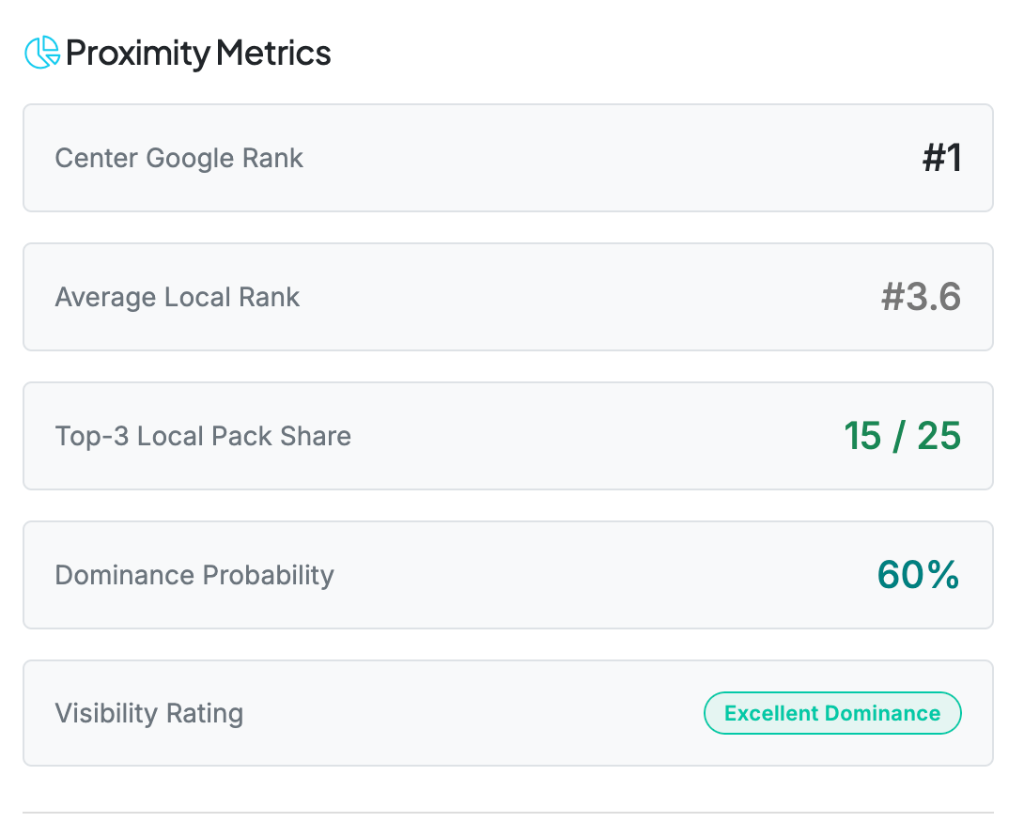
Understand exactly how your business ranks at every street corner. Our interactive Proximity Geogrid tracks rankings in a coordinate radius around your physical shop location, revealing ranking gaps and visibility dominance.
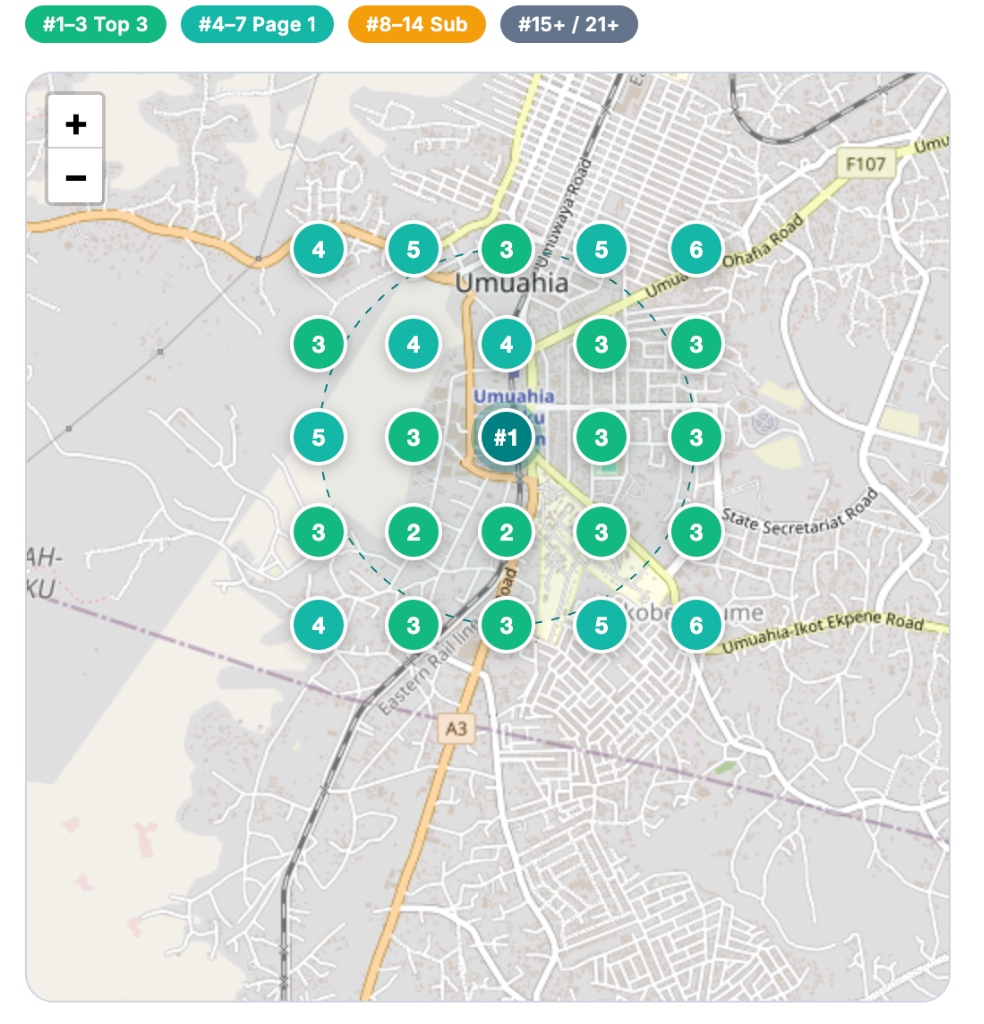
Proximity Analytics
Designed for growth. Tailored for you.
Whether you are managing one listing or scaling hundreds of locations, we have you covered.
For Local Businesses
You don't need to be an SEO expert to stand out locally, you just need the right team in your corner. Grow your presence with an intuitive local SEO platform and a support team that make getting found online a breeze.
- Direct Google Business Profile Integration
- Citation Index Progress Tracker
- Customer Reviews & Sentiment Builder
- Direct Chat & Quote Management
For Agencies & Consultants
Scaling your local SEO services shouldn't feel like an uphill battle. Whether you're managing a few clients or up to 250 locations, we provide the platform and human support you need to deliver world-class results at scale.
- Master Partner & Client Account Manager
- White-Labeled Client Portals & Reports
- Wholesale Pricing & Bulk Listing Credits
- Automated Citation Health Monitoring
Looking for a fully managed Local SEO program?
Don't have the time to configure software? Our dedicated team handles everything. We run end-to-end Local SEO campaigns optimized specifically for medical practices, local contractors, legal professionals, and multi-location retail operations.
Maps Pack Setup
Full setup, geo-targeting optimization, and verification support.
Manual Citations
Clean up discrepancies and build new directory profiles manually.
Backlink Building
Acquire high-trust context-relevant links from local platforms.
Monthly Reporting
Detailed telemetry tracking, click analysis, and geogrid positions.
Our 3-Phase Domination Process
Audit & Analysis
We scan your current presence, NAP consistency, and competitor map gaps to isolate your local target keywords.
Citations & Maps Building
We build high-trust manual citations, resolve duplicates, and fully optimize your Google Business Profiles.
Ongoing Growth & Content
Continuous content publishing, review builders, local link outreach, and geogrid ranking maintenance.
SEO Insights
AI Search Optimization: The Complete Guide for Local Brands
A potential customer asks ChatGPT for a recommendation in your service area. The AI names three businesses. You're not one of them. That customer will never know you exist. AI search optimization is the practice of structuring your web content and building brand credibility so AI chat tools and search summaries cite your business. This guide covers how AI engines decide which local businesses to recommend, the specific tactics that earn those recommendations, and how to measure whether your optimization work is paying off. What AI search optimization means for local businesses AI search optimization (also called Generative Engine Optimization or GEO) is the practice of structuring web content and building brand credibility so AI chat tools and search summaries cite your business. The term covers visibility across ChatGPT, Perplexity, Google AI Overviews, and Google's Ask Maps feature. The concept that matters most here is entity authority. AI engines work by understanding your business as a distinct, verified thing rather than a collection of keywords. When someone asks Perplexity "who's the best emergency plumber in Midtown," the AI doesn't scan for keyword matches. It looks for businesses it can confidently identify and recommend based on structured data, reviews, and consistent information across the web. For local businesses, this shift changes the game. AI answers often replace the traditional list of ten blue links. If the AI doesn't mention you, you're excluded from the buying process before the customer ever sees a search results page. Why local buyers are shifting from Google Search to AI answer engines The way people search for local services is changing. Instead of typing "plumber near me" and scrolling through results, buyers now ask conversational questions like "Find me a reliable plumber who does emergency call-outs in the evening." Google's Ask Maps feature, launched in March 2026, processes natural language questions by reading across business profiles and reviews. It constructs an answer rather than returning a ranked list. The consequence is straightforward: if your business profile doesn't contain the specific information the AI needs to answer the question, you won't appear in the response. Traditional Search AI Conversational Query "dentist downtown" "Which dentist near me accepts walk-ins on Saturdays?" "HVAC repair" "Who can fix my AC today and has good reviews?" "Italian restaurant" "Find a quiet Italian place with outdoor seating for a business dinner" How AI search optimization differs from traditional local SEO Traditional local SEO and AI search optimization share some foundations, but they differ in what they measure and how they reward businesses. Rankings versus brand perception in AI answers Traditional SEO tracks your position in a list. You're either #3 in the Map Pack or you're not. AI search works differently. The question becomes: are you mentioned at all, and how are you described? Share of voice is the metric that matters here. It measures how often your brand appears in AI responses compared to competitors. A business can rank well in traditional search but be completely absent from AI answers if its profile lacks the specificity AI engines require. Keyword matching versus conversational prompts Traditional SEO targets exact keywords. You optimize a page for "emergency plumber Toronto" and hope to rank when someone types that phrase. AI responds to intent and context. A user might ask "who can fix a burst pipe at 2am in the Annex neighbourhood" and never use the word "plumber." Your content has to answer the question directly, not just contain the keyword phrase somewhere on the page. Backlinks versus brand mentions and entity signals Backlinks still matter, but AI engines also weigh unlinked brand mentions, reviews, and citations as trust signals. Entity signals (consistent business information that confirms your business exists and is credible) carry weight in AI ranking decisions. A business mentioned positively in local news, community forums, and industry directories builds the kind of corroborated presence AI engines trust. Proximity signals in Google AI Mode and Ask Maps For local search specifically, AI considers physical distance when recommending businesses. However, the balance has shifted. A business five kilometres away with a complete, detailed profile can outrank a business two streets away with a thin, incomplete one. Google's AI features use location data differently than traditional Map Pack rankings. They're looking for confident answers, and confidence comes from profile completeness as much as proximity. How AI answer engines decide which local businesses to recommend AI engines evaluate several factors when selecting businesses for inclusion in answers. Entity authority and business profile completeness AI engines look for complete, specific business profiles. A sparse Google Business Profile or incomplete website signals low authority. The AI needs to understand what you do, where you do it, and for whom. Every unfilled field is a question the AI can't answer. If a user asks about wheelchair accessibility and your profile doesn't specify, you're not a confident answer. LocalBusiness schema and structured data Schema markup is code that labels your business information so AI can read it directly. Think of it as a digital business card written in a language machines understand. For local businesses, the relevant schema types include: LocalBusiness: Your core business identity, address, and contact information FAQ: Common questions and answers about your services Service: Specific offerings with descriptions Review: Customer feedback and ratings Review volume, recency, and sentiment AI engines read reviews to gauge real-world reputation. Recent, positive reviews with specific service mentions carry more weight than old or generic reviews. A review that says "Great service, will be back" contributes almost nothing. A review that says "They replaced our water heater same-day and the technician explained every step" gives the AI specific, processable information about service type, speed, and customer experience. Citation consistency across directories Citations are business listings on directories like Yelp, Yellow Pages, and industry sites. Inconsistent NAP (name, address, phone) information confuses AI engines about which business is the "real" one. When Google crawls a directory and finds your business name, then crawls your website and finds slightly different information, it creates uncertainty. Consistency across all listings builds the trust signals AI engines rely on. How to optimize your local business for AI search results The tactical work of AI search optimization builds on traditional local SEO but adds specific requirements for how content is structured and presented. 1. Publish specific neighborhood and service pages AI needs granular content to match specific queries. A single "Services" page won't appear for "emergency AC repair in Midtown." Create dedicated pages for each service-area combination. If you offer boiler repair and pipe fitting, build separate pages for "Boiler Repair in Camden" and "Pipe Fitting in Chelsea." This tells AI engines exactly where you operate and what you do. 2. Add LocalBusiness, FAQ, and Service schema to every key page Implement schema on location pages, service pages, and FAQ sections. Google's Structured Data Markup Helper is a free tool that generates the code. You select your business type, input your URLs, highlight the relevant text, and paste the generated code into your page header. 3. Answer high-intent local questions inside your content Lead with the answer. Put the main point at the very top of each section. AI engines scan headings and break text into smaller parts, looking for direct answers to user questions. Write content that directly answers questions like "How much does a boiler replacement cost in Toronto?" or "What's the best time to call an emergency plumber?" Keep sentences simple with one clear idea per sentence. 4. Keep your Google Business Profile active with posts and Q&A AI reads GBP activity as a freshness signal. A profile with a Google Post from this week signals that the business is operational and engaged. A profile with no posts for six months raises uncertainty about current status. Weekly updates, current photos, answered questions, and recent offers all contribute to what Google's systems interpret as prominence. 5. Build citations on high-authority local directories List quality matters more than volume. Focus on industry directories, local chambers of commerce, and data aggregators. A handful of clean, corroborating citations outperforms dozens of inconsistent ones. 6. Earn mentions in local press and trusted publications AI engines use off-site mentions to verify credibility. Positive mentions on active community discussion platforms contribute to what AI engines interpret as real-world consensus. Target local news outlets, industry blogs, and community sites. Unlinked brand mentions still contribute to entity authority. 7. Request and respond to reviews weekly Position review generation as a habit, not a campaign. The timing and channel of your review request matters. A well-timed SMS after a completed service job generates far more useful review content than a generic email weeks later. Responding to reviews adds fresh content and shows engagement. AI reads both the review and the response. How to measure AI visibility for local businesses Traditional rank tracking doesn't capture AI performance. Track brand mentions inside LLM answers The simplest approach is manual testing. Ask ChatGPT and Perplexity the questions your customers would ask and check whether you appear. "Who's the best [your service] in [your area]?" is a good starting point. Monitor AI Overviews and Ask Maps placements Google Search Console now shows some AI Overview data. For local businesses, manually checking Ask Maps queries in your service area provides direct insight into whether your profile is being recommended. Run geogrids for proximity-based AI recommendations Geogrids are tools that check visibility from multiple physical points across a service area. AI recommendations change based on searcher location, so a business might appear prominently for queries from one neighbourhood but be invisible from another. AI search optimization myths local brands can ignore Myth: You need to block AI crawlers to protect your content. Reality: Blocking crawlers removes you from AI answers entirely. Myth: Traditional SEO is dead. Reality: AI engines still pull from organic search results. Strong SEO feeds AI visibility. Myth: Only big brands get cited by AI. Reality: AI engines favor specific, authoritative answers. Local specialists can outperform generalists. Myth: You need expensive AI-specific tools to compete. Reality: Foundational work (complete profiles, accurate citations, direct answers) matters most. Frequently asked questions about AI search optimization for local businesses What is generative engine optimization? Generative Engine Optimization (GEO) is the practice of optimizing content specifically for AI-generated answers and summaries. While traditional SEO focuses on ranking in search results, GEO focuses on being cited and recommended when AI tools synthesize answers for users. What is the difference between GEO, AEO, and LLMO? GEO (Generative Engine Optimization), AEO (Answer Engine Optimization), and LLMO (Large Language Model Optimization) are overlapping terms describing the same general practice. The terminology varies by who's using it, but the underlying work is the same. Does traditional SEO still matter for AI search visibility? Yes. Google's documentation confirms that AI features on Google Search still rely on the same ranking systems and quality signals as traditional search. Strong traditional SEO creates the foundation that AI visibility builds on. How can a local business get cited by ChatGPT or Perplexity? Build entity authority through complete profiles, consistent citations, recent reviews, and content that directly answers questions your customers ask. AI engines cite businesses they can confidently identify and verify across multiple sources. How long does AI search optimization take to show results for local businesses? Results vary by starting point, but most local businesses see changes in AI mentions within two to four months of consistent profile updates, citation building, and content improvements. Make your local business the obvious answer AI search is shifting how customers find local businesses. The businesses that adapt early capture demand competitors miss entirely. The work isn't complicated. It requires systematic attention to profile completeness, citation consistency, and content that directly answers customer questions. The gap between an average profile and a fully optimized one can usually be closed in a few focused hours.
Read Full InsightAI Search Optimization: The Complete Guide for Local Brands
Local SEO for Lawyers: Proven Strategies That Actually Work
Local SEO Strategies for Small Business Owners Who Want Real Results
What Local SEO Does for Small Businesses and Why It Matters for a Business Owner in Nigeria
Deep-dive analyses on how AI engines, local search visibility, and custom CRM systems interact to grow high-ticket businesses.
Browse All Insights