Key Takeaways
- Modern buyers leverage AI search to create "silent shortlists," often eliminating brands before traditional marketing engagement.
- Traditional click-based marketing funnels are broken due to high zero-click rates in AI-driven search results.
- Brands must optimize for AI synthesis by ensuring their digital footprint is machine-readable, authoritative, and cited across platforms.
- Marketing budgets are inefficiently spent on vanity clicks and siloed strategies; focus must shift to foundational trust signals and "Share of Model" (SoM).
- Success in the AI era requires realigning strategy to provide concise, authoritative answers that AI engines can directly recommend to high-intent prospects.
It’s 9:15 AM. Your ideal client, the high-value lead you’ve spent thousands of dollars trying to target with retargeting ads, top-of-funnel ebooks, and general PPC campaigns isn't scrolling through your carefully built funnels.
Instead, they opened Google or ChatGPT and typed:
"What is the best enterprise solution for X, and who actually delivers results without a 6-month onboarding window?"
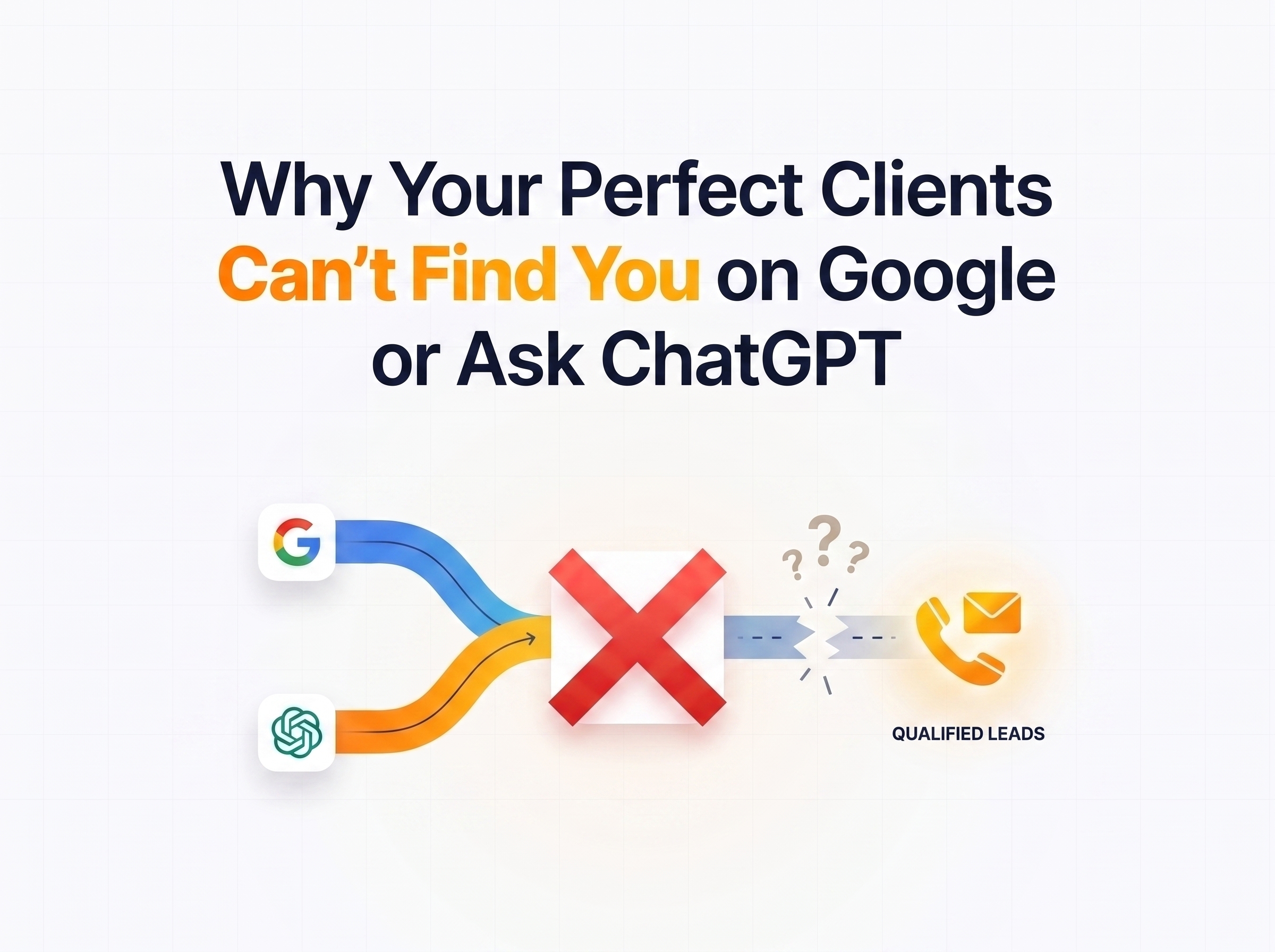
Within 1.5 seconds, the AI engine synthesized dozens of sources, reviewed real customer sentiment, evaluated entity authority, and handed them a curated answer. Before they ever click a single blue link or land on a traditional marketing page, they have already built a "silent shortlist."
If your brand wasn't named in that synthesized answer, you didn't just lose a click. You were eliminated from the buying process before it even began.
Meanwhile, your marketing budget continues to bleed out on strategies built for 2021. Here is why this shift is happening right now, why traditional marketing budgets are draining fast, and how you can realign your strategy to win in the era of AI search.
The End of the Traditional Funnel: Zero-Click & AI Shortlists
For over a decade, digital marketing operated on a simple exchange: publish content → rank on page 1 of Google → capture the click → collect an email → nurture the lead.
That exchange is fundamentally broken.
- Over 64% of Google searches now end in zero clicks: Google AI Overviews and featured snippets answer the query directly on the search results page.
- Conversational AI search engines operate with 78% to 93% zero-click rates: Platforms like ChatGPT, Perplexity, and Google AI Mode prioritize direct synthesis over sending users down a rabbit hole of website clicks.
- The "Silent Shortlist" phenomenon: Modern buyers ask AI engines complex, multi-layered questions to evaluate vendors long before reaching out to sales.
When your prospective clients use search or AI today, they aren't looking for broad 2,000-word fluff articles. They are seeking fast, authoritative consensus. If your digital footprint isn't machine-readable or cited across touchpoints, AI engines simply won't recommend you.
Where Your Marketing Budget Is Actually Draining
If your cost-per-acquisition (CPA) is creeping up while conversion rates stall, your budget is likely leaking through three major structural holes:
Chasing High-Volume, Low-Intent "Vanity Clicks"
Paying for broad keywords or pouring resources into generic top-of-funnel blog posts ("What is X?") no longer works. AI engines summarize basic definitions instantly. If your content relies on answering surface-level questions, users digest the summary and bounce, draining your ad spend or content budget without driving revenue.
Treating SEO and AI Search as Disconnected Silos
Splitting your budget between traditional SEO, expensive "AI search growth hacks," and isolated ad channels burns money. Large language models (LLMs) and Google's AI models rely on the same fundamental trust signals: entity authority, clean structured data, digital PR, and verified customer proof.
Measuring Clicks Instead of "Share of Model" (SoM)
If your primary success metric is still total organic sessions, you are tracking a declining asset. Raw traffic volume is down across the web, but referral quality from AI searches is significantly higher—post-AI click visitors convert up to 23% better because they arrive fully informed. Measuring success by surface-level pageviews leads to cutting tactics that actually drive high-intent deals.
How to Plug the Leak: A 4-Step Action Blueprint
To stop the budget drain and ensure your brand appears front and center when prospective buyers query Google or ChatGPT, pivot your marketing execution toward these core focus areas:
| Action Pillar | What to Eliminate | What to Build Instead |
| Content Strategy | Generic 2,000-word definition articles | Proprietary data, original case studies, and clear Q&A formatting |
| Technical Footprint | Bloated pages and missing metadata | Clean Schema markup (JSON-LD) and clear entity associations |
| Distribution | Isolated blog publishing | Ecosystem presence: Reddit, industry review hubs, podcasts, and digital PR |
| KPI Tracking | Raw traffic volume & click-through rates | Share of Model (SoM), pipeline influence, and revenue per referral |
Step 1: Optimize for "Answer Engine Readiness"
Structure key landing pages and insights to give direct answers upfront. Lead with clear, declarative statements within the first 200 words, backed by structured FAQ data and verified stats. AI models prefer citing source material that presents facts directly without fluff.
Step 2: Build Brand & Entity Authority Beyond Your Site
ChatGPT and Google AI Overviews don't just read your website; they evaluate what the broader web says about you. Invest in digital PR, get featured on respected podcasts, earn reviews on major platforms, and engage in key community forums. When AI scans the Web to form an opinion, positive consensus across third-party sources guarantees your spot on the shortlist.
Step 3: Shift Paid Spend to High-Intent "Decision Phase" Queries
Reallocate budget away from broad discovery keywords. Focus paid campaigns spend strictly on high-intent comparison, brand defense, and solution-seeking queries where users are ready to take action.
Step 4: Track Your Brand's "Share of Model"
Audit how LLMs respond to high-intent questions in your niche. Prompt ChatGPT, Perplexity, and Google AI with real buyer questions monthly. Track how often your brand is cited versus competitors, and refine your authority messaging based on where AI tools draw their data.
Frequently Asked Questions
What is the "silent shortlist" phenomenon in AI search?
It refers to how modern buyers use AI engines like Google AI Overviews or ChatGPT to synthesize information and evaluate vendors, forming a list of preferred solutions *before* ever clicking a website or engaging with traditional marketing funnels.
Why are traditional marketing funnels no longer effective in the AI era?
Traditional funnels rely on capturing clicks, but AI search engines increasingly provide direct answers (zero-click results). This means users get their information and make purchasing decisions without needing to visit a brand's website.
How can brands ensure they are recommended by AI search engines?
Brands need a machine-readable digital footprint, strong entity authority, clean structured data, verified customer proof, and consistent citations across various touchpoints. This allows AI engines to confidently synthesize and recommend them as authoritative sources.
What is "Share of Model" (SoM) and why is it a crucial new metric?
"Share of Model" measures how often your brand is included in AI-generated answers or recommendations. It's vital because AI-referred visitors are typically higher quality and convert significantly better, making it a more valuable indicator of success than raw traffic volume.
Where are marketing budgets commonly being wasted in the current landscape?
Budgets are often drained by chasing high-volume, low-intent "vanity clicks" from generic keywords, treating traditional SEO and AI search as disconnected strategies, and measuring success solely by outdated traffic metrics instead of AI recommendations.
Moving Forward
Your perfect clients haven't stopped searching; they've just stopped clicking on search clutter. They want fast, accurate, synthesised answers to complex problems.
By shifting your marketing budget away from high-volume click-chasing and anchoring your strategy in entity authority, clear structural data, and ecosystem visibility, you plug the budget leak and guarantee that when your buyers ask AI for a recommendation, your name is the answer.